


Why Automate Aluminum Profile Machining in 2026? | Window & Door CNC
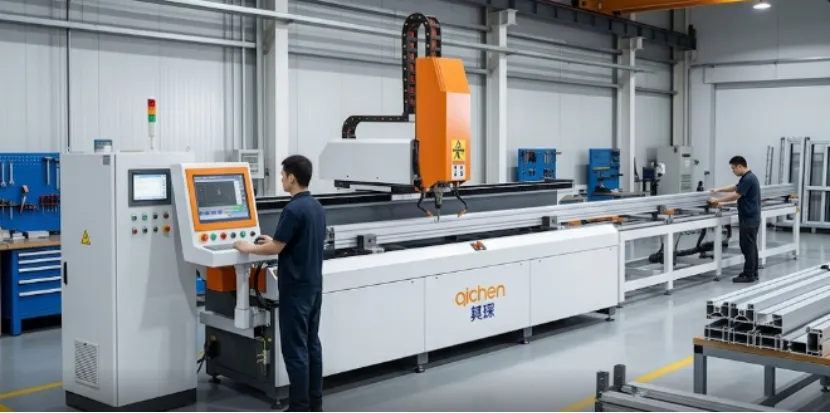
If you run a factory that makes doors and windows, 2026 probably feels a bit unforgiving. Window and door manufacturing automation is no longer a nice upgrade for later. It has become a direct response to rising labor costs in window and door manufacturing, tight delivery schedules, and the daily drag caused by repetitive drilling and slotting. In many plants, the real problem is not one slow machine. It is the chain of small delays: loading, locating, flipping, drilling, slotting, checking, then doing it again on the next piece. That is where aluminum profile machining starts to decide profit, lead time, and customer trust.
A useful benchmark here is MALIDE. It is a high tech manufacturer focused on aluminum alloy equipment and automated lines, with operations dating from 2017, a 6,000 square meter production base, more than 50 professional employees, and more than 5,000 customer collaborations. Its range covers profile machining centers, gantry machining centers, horizontal profile machining centers, profile cutting saws, and system door and window processing equipment. The company also states that it serves more than 30 countries and offers remote diagnosis, training, spare parts support, and emergency failure solutions within 48 hours. That mix matters because buyers usually need more than a machine. They need a supplier that can keep production moving when the shop gets busy, which is usually when something decides to go wrong.
Why Is Window and Door Manufacturing Automation Moving Faster in 2026?
The shift is happening because the pressure is simple and very practical. You need better output with fewer hands, less waiting, and less rework. That is the whole story, really. The plants that move first are often the plants that got tired of losing hours to tasks that look small on paper but stack up all day.
Labor Costs Keep Rising, but Skills Are Harder to Replace
Most factories do not struggle because one operator cannot drill a hole. They struggle because skilled people spend too much time on repeat work. Manual machining bottlenecks in window and door factories usually appear in hole patterns, slot work, lock hole positions, and face changes. At the same time, labor shortages in aluminum profile processing make it harder to staff every station with experienced people. When that happens, mistakes show up in the boring places first. One hole is off, one slot takes a second pass, one profile gets bumped during handling. Then your schedule starts slipping.
Tight Delivery Schedules Leave No Room for Repeated Handling
Customers now expect faster turnaround on standard orders and more flexibility on mixed orders. That is rough for a shop that still depends on repeated clamping and manual repositioning. A lot of lost time sits between cuts, not during cuts. Door and window production efficiency improves when you remove those non cutting steps. That is why more window and door manufacturers are replacing scattered manual stations with one controlled machining flow.
What Does an Aluminum Profile Machining Center Change on the Shop Floor?
An aluminum profile machining center changes the way work moves. Instead of sending one profile through several disconnected steps, you bring more of the job into one programmed cycle. That reduces hand moves, cuts waiting time, and makes output easier to predict.
One Setup Can Cover More of the Typical Door and Window Job
The knowledge base shows several 3000 mm drilling and milling models built for door, window, and curtain wall profiles. The QCV-CNC3000C6 and QCV-CNC3000C12 support drilling and milling for aluminum profiles, chamfering, flat carving, tapping, circular holes, and slot holes. Both use 3000 mm X-axis travel, 24000 r/min spindle speed, and 90° / 0° / -90° three sided servo flipping. The 12-tool version adds a disc tool magazine, which is useful when one order includes many repeated features across several profile types. This is where tool changing efficiency stops being a brochure phrase and starts saving hours.
Multi-side Machining Cuts Idle Time and Repeat Errors
For many shops, multi-side machining is the real step forward. When the workbench handles three sided servo flipping, you do not keep removing and reloading the same part. That means less idle time, less manual alignment, and a better chance to increase machining consistency across batches. It also makes precision machining more realistic on busy days, not just on good days when the line is calm. Profile machining center pages and the knowledge base both point to this three sided layout as a practical fit for doors, windows, and curtain wall profiles.

Which Machine Details Matter Most When You Compare Options?
Not every factory needs the same machine class. A small workshop doing short runs will look at different things than a plant handling curtain wall work, larger sections, or mixed daily orders. Still, a few details keep coming up because they affect output right away.
Travel, Tool Capacity, and Workstation Design Matter First
A 3000 mm X-axis suits common profile lengths in many door and window jobs, while 6-tool and 12-tool layouts support faster changeover on mixed patterns. For lighter and shorter parts, the knowledge base also lists compact two-head drilling and milling machines with 0° / 90° flipping, plus a model with front, rear, left, and right workstations for cyclic loading and unloading. That kind of setup supports batch processing without turning the shop into a maze of carts and waiting pieces.
Large Profiles Need a Larger Platform
When the work moves into curtain wall or medium to large profiles, you need more travel and better fixture flexibility. The QCL-CNC706 three-axis model is built for circular holes, slot holes, lock holes, irregular holes, corner work, and flat carving on larger profiles, with 7000 mm X-axis travel and a gantry frame structure. The horizontal series adds multi station design and multi slot tool magazine features aimed at mass production. Pair that with end face milling and double head saw capacity for 45° and 90° cutting, and the production flow becomes much more stable. Funny thing is, shops often call this “speed,” but what they really buy is fewer interruptions.
How Does Automation Help You Reduce Labor Dependency and Improve Delivery Performance?
The main value is not mystery. You use automation to reduce labor dependency, keep quality steadier, and improve delivery performance when orders pile up. That is especially true when the same hole and slot patterns repeat over dozens or hundreds of pieces.
Fewer Hand Moves Usually Mean Fewer Problems
Every manual transfer creates a chance for misalignment, delay, or surface damage. When one machine handles more of the cycle, the process gets simpler. Less loading, less flipping by hand, less checking against the last part. In practical terms, that helps you hold schedule when labor is thin and daily order mix is messy.
Automation Makes Growth Easier to Manage
For window and door manufacturers, growth gets harder when the process depends too much on a few skilled people. Automated profile machining, supported by cutting saws and end milling equipment in the same product family, gives you a cleaner base to expand from. That is why window and door manufacturing automation in 2026 is less about chasing a trend and more about building a line that can keep up with real factory pressure. If you are mapping equipment options, MALIDE is one of the more complete examples because its portfolio covers the profile machining center, gantry, horizontal, saw, and service side in one place.
FAQ
Q1: Why are more factories investing in aluminum profile machining now?
A: Because labor is more expensive, delivery windows are tighter, and repeated hole and slot work eats too much time when it is still handled across separate stations.
Q2: What is the biggest gain from an aluminum profile machining center?
A: Usually it is not just faster cutting. It is fewer setups, less manual flipping, and more stable output across repeated jobs.
Q3: Is three sided servo flipping really useful for door and window work?
A: Yes. It helps a lot when the same profile needs work on more than one face, especially for lock holes, slot holes, and repeated machining on standard series.
Q4: When should a factory look at a gantry machine instead of a standard profile machining center?
A: When profile size grows, travel length becomes critical, or the job includes larger curtain wall parts, more complex holes, or wider fixture layouts.
Q5: Can automation help even if order sizes are mixed rather than huge?
A: Yes. Mixed orders often benefit even more because reduced setup time, faster tool changes, and steadier cycle flow make short and medium runs easier to manage.


