


How to Reduce Burrs on CNC-Machined Aluminum Profiles
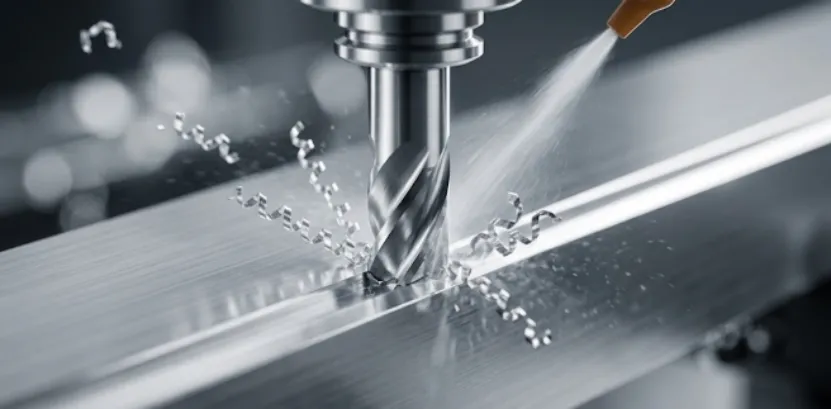
If you are looking for how to reduce burrs in aluminum machining, the real answer is usually not a single trick. Burrs in aluminum machining often come from a mix of tool wear, weak clamping, shaky cutting, and poor chip flow. On aluminum profiles, that problem shows up fast. A small burr on a slot or corner can turn into extra handwork, bad fit-up, and ugly surface treatment later. That is why shops care so much about reduce burrs on aluminum profiles and improve surface finish in aluminum machining at the same time.
A good example is MALIDE. From an industry view, it sits in a practical spot. It is a national high-tech manufacturer focused on aluminum alloy processing equipment, with a 6,000 m² production base, more than 50 staff, and cooperation with over 5,000 customers since 2017. Its line covers profile machining centers, gantry machines, horizontal machines, and cutting saws for doors, windows, curtain walls, rail transit, aerospace, solar, and industrial parts. That matters here because burr control is rarely just about the cutter. It usually depends on whether your machine, fixture, and process are built for profile work in the first place.
What Causes Burrs in Aluminum Machining?
Before you fix the burr, you need to know where it starts. In aluminum profile machining, burrs usually come from the cut losing control at the edge. Sometimes the cutter rubs instead of shearing cleanly. Sometimes the profile shifts a little. That little shift is enough, honestly.
Tool Wear and Cutting Conditions
A dull tool is the first suspect. It pushes material before it cuts, which leaves a rolled edge. The same thing happens when speed, feed, and depth do not match the job. On thin walls, holes, and narrow slots, bad settings can turn a clean edge into a fuzzy one in a single run. If you machine visible frame parts or curtain wall parts, the defect shows up right away.
Workholding and Vibration
Weak support is another common cause. The BT40 series page points out that a casting spindle structure and box-style structure help reduce vibration and improve surface quality. That is not marketing fluff. When a long profile chatters, the cutter exits badly and leaves burrs on corners, holes, and pocket edges. A rigid setup cuts cleaner.
Tool Exit and Chip Control
Burrs also form at the end of the cut. If chips stay in the cut, they get recut and drag along the edge. If the tool exits too hard, the edge tears. This is why surface finish in aluminum profile machining often improves when chip flow improves too. The two are closely linked.
How to Reduce Burrs on Aluminum Profiles?
This is the part most buyers and operators care about. You do not want more deburring labor. You want fewer burrs coming off the machine. That means cleaner cutting, steadier support, and fewer awkward repositioning steps.
Use Sharper Tools and Add a Light Finishing Pass
If your cutter is doing both roughing and finishing in one heavy pass, burrs often stay. A lighter final pass helps a lot, especially on visible edges and holes. On small batch work, that may feel like extra time. In practice, it often saves time because you spend less time fixing edges by hand.
Match the Machine to the Job
A proper CNC machine for aluminum profiles gives you more control over burr formation. In the knowledge base, the 3000 mm drilling and milling centers are built for milling, chamfering, flat carving, and optional tapping, and some models support 90° / 0° / -90° three-side servo flipping. The SFT6 has a 6-tool magazine, while the SFT12 uses a 12-tool disc magazine at 24,000 r/min. That matters because you can separate roughing, finishing, and chamfering instead of asking one tool to do everything.
Keep Parts Stable on More Than One Face
For profiles with holes and slots on multiple sides, repeated reclamping often creates edge damage. Three-side flipping helps keep the part position more consistent. It is a simple point, but it solves a lot of ugly little burr problems on real shop jobs. The knowledge base also shows horizontal machines with multi-station design for mass production, which helps keep cycle flow steady and tool changes shorter.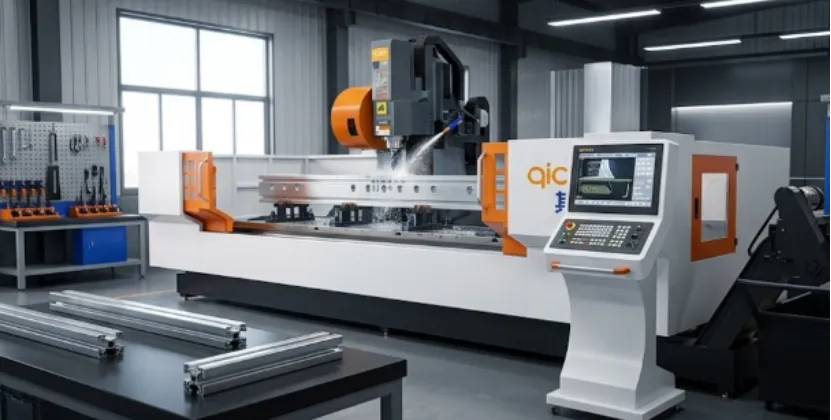
What Machine Features Help Reduce Burrs on Aluminum Profiles?
If you are comparing equipment, this is where the buying decision starts to affect quality. An aluminum profile machining center should not just cut fast. It should cut cleanly, hold size, and stay calm at the edge of the part.
Rigidity, Travel, and Tool Capacity
The BT40 profile machining center is a good case. Its X travel is 2500 to 6500 mm, with 550 mm on Y, 500 mm on Z, BT40 taper, 24-tool capacity, 12000 r/min spindle speed, and 7.5 kW power. On larger profiles, that combination gives you room for cleaner process planning and fewer setup compromises. The same product family is described as suitable for aluminum, copper, steel, and non-metal materials, with use in rail transit, aerospace, and communication work.
Process Range Across Different Jobs
The wider product line also helps when your work is mixed. The knowledge base includes gantry machines that combine drilling, tapping, and milling, plus horizontal models for different profile sizes and batch needs. That range matters because burr reduction is easier when the machine fits the part, instead of forcing every job onto one platform. For broader internal navigation, a buyer reading about burr control would naturally move next to the aluminum profile machining center section.
How to Improve Surface Finish in Aluminum Machining?
If you want to improve surface finish in aluminum machining, you cannot treat burrs as a side issue. Clean edges are part of finish quality. A part can look smooth on the face and still fail inspection because the slot mouth or corner edge feels rough.
Cut Cleanly First, Deburr Less Later
The best approach is still preventive. Use a sharp cutter, support the profile well, keep chip flow open, and use a finishing pass where the edge matters. Then use deburring aluminum profiles only for the spots the cut cannot fully clean up. That is a much better route than machining badly and fixing everything by hand after. For high-volume work, a steady machine layout, enough tool positions, and stable multi-side processing make a real difference.
If your goal is to reduce burrs on CNC-machined aluminum profiles, the pattern is clear. Better tools help. Better settings help. But the bigger gains often come from machine rigidity, fixture stability, and a process that matches the profile itself. That is where edge quality starts to settle down.
FAQ
Q1: What causes burrs in aluminum machining?
A: The most common causes are dull tools, poor cutting settings, weak clamping, vibration, and bad chip removal.
Q2: How to prevent burrs on aluminum profiles?
A: Use sharp tools, keep the profile stable, add a light finishing pass, and avoid rough tool exit on critical edges.
Q3: Does a BT40 spindle help reduce burrs?
A: It can. A BT40 setup usually gives better rigidity and more stable cutting on larger or heavier profile jobs.
Q4: Is deburring aluminum profiles still necessary?
A: Yes, sometimes. But it should be the last step, not the main fix for a poor cutting process.
Q5: What kind of CNC machine for aluminum profiles is better for low burr output?
A: A machine with solid structure, enough tool capacity, stable clamping support, and the right travel for your profile length is usually the better choice.


