


6061 vs 7075 vs 2024: Best Aluminum Alloys for CNC Machining
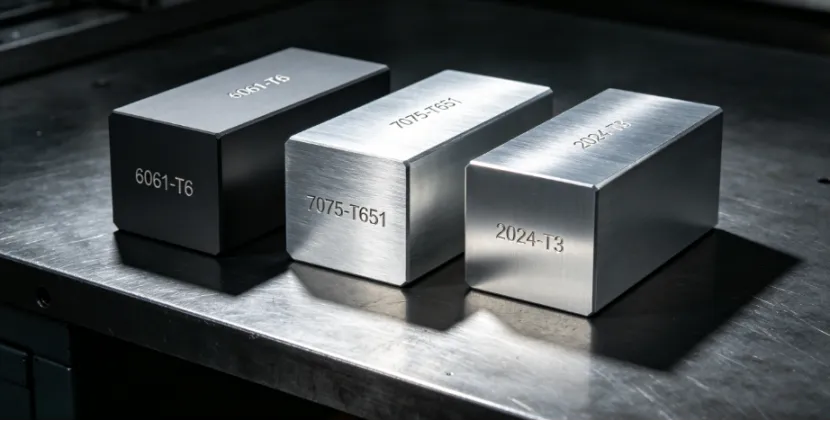
Picking between 6061 vs 7075 vs 2024 is not just about raw strength. You really want to dodge three costly traps. These are tough cutting, shifting sizes, and bad pricing for your project. So, figuring out which aluminum alloy is best for cnc machining changes based on your actual part. Wall thickness matters. Tight fits matter. Rust risk matters, too. Lots of machine shops look at these exact three grades. Why? Because 6061 aluminum gives a great middle ground. On the other hand, 7075 aluminum brings way more strength. Then you have 2024 aluminum. It shines when bending and stress matter more than a perfect surface.
Why Does Alloy Choice Matter?
People look up the best aluminum for cnc machining hoping to find one clear winner. But real shop work is messy. Think about a window piece, a big factory plate, and a light bracket. They are all metal. Yet, they break in very different ways. One might rust fast. Another might warp in the vise. A third piece looks great in the machine but fails during build time. Because of this, you must pick aluminum alloys for cnc machining carefully. Look at how they cut. Check how stable they stay. Think about where they will live. Count the total cost. Do not just look at a single strength test.
What Makes 6061 Aluminum the Safe Choice
For daily shop tasks, the machinability of 6061 aluminum keeps it on top. It cuts very clean. It leaves a nice finish. Plus, it rarely surprises you in normal clamps. Does your part go into doors, frames, or standard factory gear? If so, 6061 is often the best aluminum alloy for cnc machining. It brings a nice mix of strength, rust blocking, and easy cutting. It is not a flashy metal. Honestly, that is why people love it.
When Does 7075 Aluminum Make More Sense
Sometimes a part must be super strong but very light. Here, 7075 steps up. In a direct 6061 vs 7075 aluminum fight, 7075 easily wins on pure strength. However, the machinability of 7075 aluminum is tricky in real life. Thin walls might warp. Fast, deep cuts can cause trouble. Bad setups lead to very costly scrap. Therefore, treat 7075 as a special performance metal. Do not use it as your lazy default choice.
Where Does 2024 Aluminum Fit
2024 aluminum acts like the quiet third choice. It steps in when parts face repeating loads. Here, handling stress is more vital than fighting rust. This makes it good for certain load-bearing parts. Still, it is not great for outdoor buildings or wet factory floors. To sum it up, a 2024 vs 6061 vs 7075 aluminum match-up is not a simple ranking game. It is about linking the metal to the exact way you expect the part to break.
Which Aluminum Alloy Fits Your Real Application?
Buyers care about this part the most. You do not just buy a textbook metal name. You buy fewer bad parts. You buy easier builds. You want the hundredth piece to act exactly like the first.
What Is the Best Aluminum for Doors and Windows Parts?
What is the best aluminum for doors and windows parts? The answer normally points right back to 6061. You need okay strength. You need clean cuts. You need better rust blocking than 2024 offers. Also, you want the metal to act the same across many holes and cuts. That matters way more than crazy high strength. In long pieces, tiny errors show up fast during the final build. Nobody wants to find bad fits at the end of the day.
What Is the Best Aluminum for Industrial Profiles?
Looking for the best aluminum for industrial profiles? Again, 6061 is the safest wide answer. It fits nicely in the middle. The metal cuts well and holds up fine at work. Is the weight load huge? Must it stay super light? Then 7075 starts looking smart. Does the part bend and bounce a lot? Give 2024 a deeper look. The rule is easy. Start with 6061. Move to 7075 for raw strength. Look at 2024 for bending stress.
What Is the Best Aluminum for Lightweight Structural Parts?
Finding the best aluminum for lightweight structural parts often leads to 7075. Its high strength and low weight pull you in. But watch out. This only works if your machine and clamps hold the piece perfectly still. If your part is very thin, long, or weirdly shaped, stop. In these cases, 6061 might still win the shop floor battle. It might lose on a data sheet, but it cuts better. That sounds crazy, but real shop life works that way.

Why Does the Machine Matter as Much as the Alloy?
Picking the metal is just step one. The exact same metal can feel easy or awful. It depends heavily on your machines. Do they actually handle long aluminum profile work? This is where MALIDE steps smoothly into the chat. In this field, they do not just sell basic tools. They are true experts in aluminum alloy processing equipment. They own a massive 6,000 m² production base. They employ over 50 staff. They brag about more than 5,000 customer collaborations. Their gear covers door and window processing, industrial aluminum, automotive lightweight parts, curtain wall profiles, rail transit, and automated lines. They build profile machining centers, gantry machining centers, horizontal profile machining centers, and cutting saws. This is exactly what you want when making long profiles and cutting on many sides.
What Kind of Equipment Matches Long Aluminum Profiles
Their info sheets paint a clear picture. They sell profile machining center choices with X-axis travel from 2500 mm to 6500 mm. They offer drilling and milling models at 3000 mm. You will also find big gantry machines reaching 7000 mm travel. These feature spindle speeds up to 24000 r/min. MALIDE lists machines for industrial aluminum alloy profiles, doors and windows, curtain wall profiles, and lightweight applications. They even have horizontal options for drilling, tapping, and milling. These help with multi-station setups. For you, this is a huge deal. Your metal choice and your machine shape rely on each other. Putting a super-strong metal in a weak machine ruins the whole job fast.
Which Aluminum Alloy Is Best for CNC Machining?
Need one fast answer? 6061 is still the safest bet when asking what is the best aluminum alloy for cnc machining. It is the smartest starting line for makers of factory parts, frames, and building pieces. Go with 7075 when pure strength rules the job. Pick 2024 when repeating stress is your main fear. So, if you still wonder which aluminum alloy is best for cnc machining, use a simple rule. Pick 6061 for a smooth mix. Grab 7075 for max strength. Try 2024 for heavy bending parts.
FAQ
Q1: Is 6061 or 7075 better for cnc machining?
A: For daily jobs, 6061 wins because it cuts easy. However, 7075 is better if you really need huge strength.
Q2: Is 2024 aluminum good for cnc machining?
A: Yes, it is. 2024 aluminum cuts nicely and handles repeating stress well. But it is a bad pick if you worry about fast rust.
Q3: Which aluminum is easiest to machine?
A: Out of these three, 6061 is mostly the easiest and safest bet for normal shop work.
Q4: Which aluminum alloy has the highest strength?
A: 7075 aluminum easily wins the strength test among these common metals.
Q5: Which aluminum alloy is best for industrial profiles?
A: Start with 6061 for most tasks. If the part holds a heavy load, paying more for 7075 makes sense.


