


One-Clamp Machining for Aluminum Door & Window Profiles
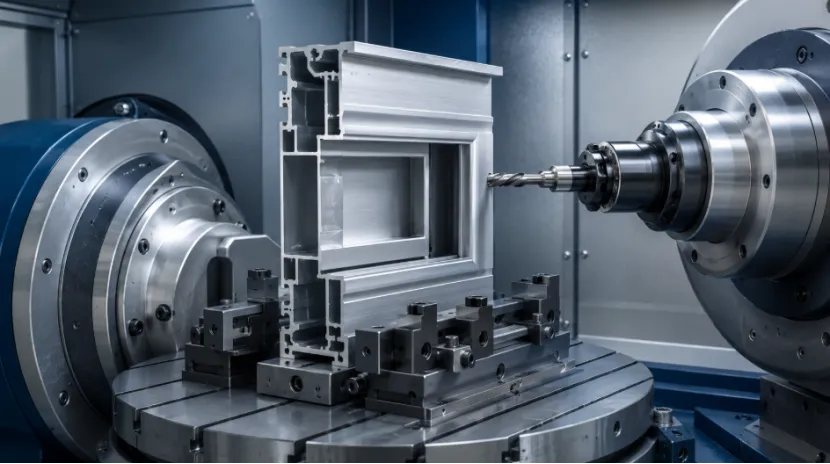
In aluminum door and window profile machining, a tiny hole shift can turn into a very real shop-floor problem. The handle does not sit right. The lock hole needs filing. A curtain wall bracket takes extra time to fit. One-clamp machining matters because it keeps the profile in one stable position while several processes are completed. That means less repeat positioning error, less manual handling, fewer aluminum profile surface scratches, and better batch consistency.
MALIDE is a focused equipment supplier for aluminum alloy profile processing, especially for factories that need practical machines rather than showroom concepts. Its product range covers profile machining centers, gantry machining centers, horizontal profile machining centers, drilling and milling machines, and cutting equipment. The company background in the knowledge base shows a 6,000 m² production site, more than 50 staff members, and cooperation with over 5,000 customers.
Its equipment is used in aluminum doors, curtain walls, industrial profiles, rail transit, solar photovoltaic, electronics, and other fields. For a buyer, this matters because door, window, and curtain wall production needs both machine stability and process experience, not just a machine with a bright control screen. You can view its Profile Machining Center line for this type of application.
What Is One-Clamp Machining in Aluminum Profile Processing?
One-time clamping means the workpiece is fixed once, then drilling, milling, slot machining, chamfering, tapping, and other work are finished under the same reference. It sounds simple. In a busy workshop, though, removing and resetting a long profile several times is where many small errors start.
One Setup for Several Processes
A CNC profile machining center can support aluminum profile drilling and milling, aluminum profile hole machining, aluminum profile slot machining, aluminum profile chamfering, and optional aluminum profile tapping.
The knowledge base lists machining centers for doors, windows, curtain wall aluminum profiles, circular holes, slot holes, chamfering, flat carving, and tapping, with 6-tool and 12-tool magazine options.
Why Repeat Positioning Error Builds Up
Every time a profile is moved, turned, and clamped again, the datum may shift slightly. One piece may still pass inspection. But in batch aluminum profile machining, 0.2 mm here and 0.3 mm there can become hardware hole mismatch, poor drainage slot alignment, or visible assembly gaps.
How Does One-Time Clamping Improve Profile Machining Accuracy?
Door and window hardware has little patience for bad hole positions. Locks, hinges, handles, corner codes, and brackets need the right hole distance. Curtain wall profile machining is even less forgiving because longer profiles make small drift easier to notice.
More Stable Hardware Hole Accuracy
One-time clamping reduces repeat positioning error because related holes and slots are processed from one stable reference. This is useful for door and window hardware hole machining, lock hole machining for aluminum profiles, hinge hole machining for aluminum profiles, and handle hole machining for window profiles.
Less Dimensional Drift in Aluminum Profile Machining
Dimensional drift in aluminum profile machining often shows up late. The first batch looks fine, then later pieces need more adjustment. One-clamp machining helps keep the machining path consistent. It is not magic, of course. Fixtures, tooling, and operators still matter. But a stable setup gives the process a better start.
Why Does One-Clamp Machining Help Protect Profile Surfaces?
Finished aluminum profiles are not just measured. They are also seen. A profile with good dimensions but scratched visible faces can still be rejected, especially for higher-end doors, windows, and curtain wall projects.
Less Manual Handling Means Fewer Scratches
When operators lift, flip, and reposition profiles again and again, the profile surface meets gloves, clamps, rollers, and worktables more often. One-clamp machining cuts down these touch points. That helps reduce aluminum profile surface scratches and rework before packing.
Cleaner Workflow for Visible Parts
A cleaner workflow also helps workers. Long profiles are awkward to move. Nobody loves carrying a long, finished frame part across a busy shop. Fewer handling steps mean less risk and a smoother production rhythm.

How Does Three-Side Flipping Support Multi-Side Machining?
Many door, window, and curtain wall profiles need work on more than one face. One side may need a lock hole. Another side may need a connector hole. A lower face may need drainage slot machining for aluminum profiles.
90° / 0° / -90° Three-Side Servo Flipping
The knowledge base states that relevant aluminum profile CNC machining equipment supports 90° / 0° / -90° three-side servo flipping, which allows three-side flipping machining without frequent manual repositioning.
It also lists 3000 mm X-axis travel, 400 mm Y-axis travel, 300 mm Z-axis travel, 24000 r/min speed, ISO30 spindle taper, and 9 kW spindle power for related drilling and milling models.
Better Fit for Curtain Wall Profile Machining
For medium and large aluminum profiles, the gantry machining center data shows 7000 mm X-axis travel, 600 mm Y-axis travel, 24000 r/min speed, and a gantry frame structure with flexible fixture combination. It is described for circular holes, slot holes, lock holes, irregular holes, chamfering, and flat carving in curtain wall profiles. That is exactly where multi-side machining starts to make practical sense.
Which Machine Features Should You Check?
A good one-clamp machining setup is not just about clamping once. You still need the right travel, tool capacity, fixture design, and process match. For daily production, the boring details are usually the details that save money.
Tool Capacity, Fixture Design, and End-Face Work
For automated aluminum profile machining, tool capacity helps reduce pauses during process change. Horizontal profile machining center options also matter when you need aluminum profile end face machining. The knowledge base notes that horizontal drilling and tapping equipment adapts to different specifications, shapes, and thicknesses, while multi-station design supports mass production and improves efficiency.
It also notes that end face milling equipment is used for aluminum curtain walls and aluminum-plastic door and window profiles, with 0.1 mm positioning accuracy listed for one model. For more equipment planning, the MALIDE website gives a broader view.
FAQ
Q1: What Is One-Clamp Machining for Aluminum Profiles?
A: One-clamp machining means the profile is fixed once while a CNC profile machining center completes several processes, such as drilling, milling, chamfering, tapping, and slot machining.
Q2: Why Is One-Time Clamping Important for Door and Window Profiles?
A: One-time clamping reduces repeat positioning error. This helps improve hardware hole accuracy for locks, hinges, handles, drainage slots, and frame connection points.
Q3: Can One-Clamp Machining Reduce Surface Scratches?
A: Yes. Less manual handling means fewer contacts with clamps, worktables, and tools. That helps reduce aluminum profile surface scratches on visible parts.
Q4: What Is the Benefit of Three-Side Flipping Machining?
A: Three-side flipping machining supports multi-side machining at 90° / 0° / -90°. It reduces manual turning and helps keep hole and slot positions more stable.
Q5: How Do You Choose a CNC Profile Machining Center for Curtain Wall Profiles?
A: Check profile length, machining faces, tool capacity, fixture stability, end-face requirements, and sample machining results before batch production.


