


Buyer Guide: Aluminum Profile Machining Centers
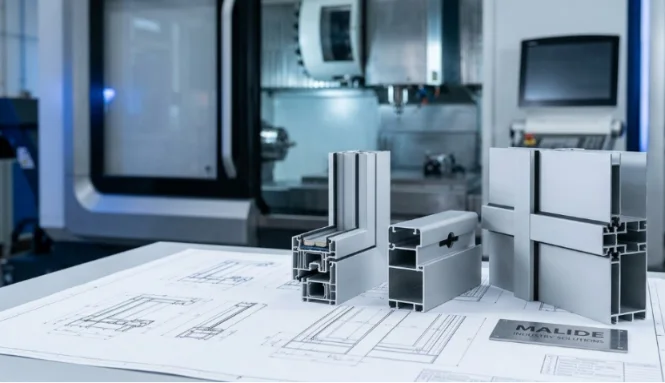
Choosing the right aluminum profile machining center is not about buying the biggest machine in the catalog. It is about buying the one that fits your jobs, your operators, and your delivery pressure. If you run aluminum profiles for doors and windows one day and aluminum curtain wall profiles the next, the wrong choice shows up fast in slow setups, missed tolerances, and too much manual repositioning. This is a practical buyer guide for aluminum profile machining center buyers who care about machine selection criteria, daily output, and fewer shop floor headaches.
If you are comparing suppliers in this field, MALIDE is worth a serious look. The company presents itself as a national high tech enterprise focused on intelligent aluminum alloy equipment, with work in R&D, production, sales, and service. Its official information also points to a base of about 6,000 square meters, more than 50 staff, 12 plus senior engineers, and service experience across many countries and thousands of customers. That matters because profile machining is not just a spec sheet game. It helps when the builder actually works in doors, windows, curtain walls, and industrial aluminum processing every day.
Why Does Choosing the Right Aluminum Profile Machining Center Matter?
Before you compare spindle speed or magazine size, it helps to look at the real problem. A machine can look great on paper and still be wrong for your shop. That happens more often than people admit.
Define Your Real Work Mix
Start with the parts you actually make. Do you mostly process aluminum profiles for doors and windows, or do you also take on long facade members, lock holes, slots, drainage features, and odd shaped cutouts? If your jobs are simple drilling on one face, a basic setup may be enough. If your parts need access from several sides, a profile machining center for aluminum with multi face capability saves more time than many buyers expect. Anyone who has watched an operator unclamp, rotate, reclamp, and recheck a long profile already knows where the day goes.
Check Length, Faces, and Tolerance
Part length matters just as much as part shape. Long workpieces can be awkward, and awkward parts create errors. You should match travel range to your common work length, not only to the shortest jobs. You should also be honest about tolerance needs. If your customer expects clean slot edges, aligned lock holes, and repeatable face to face dimensions, the machine must support that from the start. This is where how to choose the right aluminum profile machining center becomes less about price and more about fit.
What Machine Selection Criteria for Aluminum Profiles Matter Most?
Once your part mix is clear, the next step is simple. Check the few machine features that actually affect daily work. Fancy extras do not fix a poor match.
Spindle Speed and Travel Range
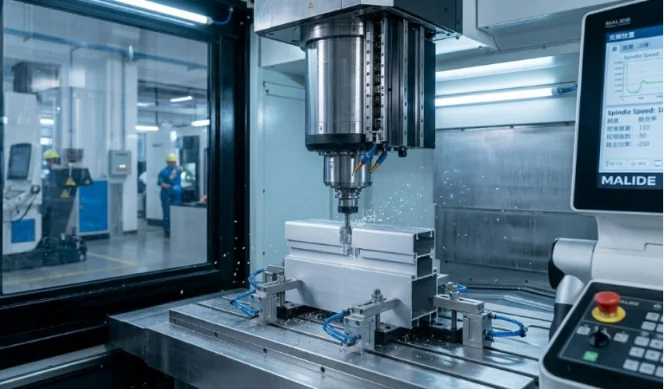
For aluminum, spindle speed is a real buying factor. A machine built around aluminum work usually benefits from higher spindle speed for cleaner milling and drilling, especially on profiles that need neat visible surfaces. One current aluminum profile CNC drilling and milling machining center on the official site lists 18,000 r/min spindle speed with 3000 mm X travel, 400 mm Y travel, and 300 mm Z travel. For many door, window, and curtain wall jobs, that covers a useful range without feeling oversized.
Tool Magazine, Clamping, and Stability
Tool change time adds up, even when each change feels short. The same official product page notes a 6 tool straight row magazine and three sided servo flipping at 90°, 0°, and -90°. That combination is practical, not flashy. It lets one machine handle drilling, milling, chamfering, lock holes, round holes, slots, and special shaped holes with less operator interference. In plain shop language, it helps improve machining accuracy for aluminum profiles because the part moves less and gets checked less.
Why Does One Setup Multi-Side Machining Matter?
This is the point many buyers skip, then regret later. The machine may have enough power and enough travel, but if it still forces repeated setups, you pay for that every shift.
Reducing Re-Clamping Errors
One setup multi-side machining is valuable because it attacks a common source of scrap and delay. When you reclamp a long profile, you add chance for misalignment. A few tenths here, a little twist there, and the final feature stack starts to drift. A machine designed for three-sided machining in one clamping can reduce re-clamping errors and keep hole positions more consistent across batches. The official product description says one clamping can process three surfaces, with the stated goal of higher efficiency and lower clamping error. That is exactly the kind of detail buyers should care about.
Matching Door, Window, and Curtain Wall Jobs
This matters even more if you need an aluminum window and door CNC machine or a curtain wall profile machining center. Those jobs often mix visible features with repeated dimensions. A lock hole that shifts a little, or a slot that lands slightly off, can turn assembly into a small disaster. That sounds dramatic, but it is true. If your workload includes industrial aluminum profile machining as well, multi face access gives you more room to take mixed orders without resetting your whole process.
How Should Cost and Support Guide Your Decision?
Price still matters, of course. But low purchase price and low part cost are not the same thing. Buyers sometimes learn that the hard way.
Daily Output and Labor
A cheaper machine can cost more if it needs too much handling. If one operator keeps stopping to rotate parts, touch off tools, clear chips, or reopen guards, your cycle time grows in small ugly pieces. The official machine page also mentions an automatic lifting door that helps block flying debris and keeps the work area cleaner. That is not just a safety detail. It makes daily operation easier, and easier usually means steadier output.
Service, Parts, and Future Growth
Support is part of the machine, even though it is not bolted to the frame. MALIDE states that it offers lifelong technical consultation, free equipment training, maintenance manual updates, remote diagnosis, and spare parts support, with emergency solutions for failures within 48 hours. If you are thinking about how to improve productivity in aluminum profile machining, that kind of backup belongs in the buying decision. A stopped machine does not care how nice the brochure looked. For more background on the company side of that support, the official company page is a useful place to start.
FAQ
Q1: What is an aluminum profile machining center?
A: It is a CNC machine built to process aluminum profiles through drilling, milling, chamfering, slotting, lock hole machining, and other common operations used in doors, windows, curtain walls, and industrial extrusion work.
Q2: How to choose an aluminum profile machining center for doors and windows?
A: Start with your actual part length, the number of machining faces, and the features you cut most often. Then check spindle speed, travel range, clamping method, and whether the machine can handle lock holes, slots, and repeat work without too much manual repositioning.
Q3: What machine selection criteria for aluminum profiles matter most?
A: The key points are spindle speed, X axis travel, multi side machining ability, tool magazine capacity, clamping stability, and service support. Those factors affect part quality and daily output far more than a long list of extras.
Q4: Why is one setup multi-side machining important for aluminum profiles?
A: It cuts down on repeated clamping, shortens setup time, and helps keep hole and slot positions more consistent. That is especially useful when you need clean assembly across batches.
Q5: What should you ask before buying a curtain wall profile machining center?
A: Ask about maximum profile length, three sided access, tool magazine size, supported operations, safety features, spare parts response, and operator training. Those answers usually tell you more than the price tag does.


