


Prevent Melting & Chipping in PVC/uPVC Profile CNC Machining
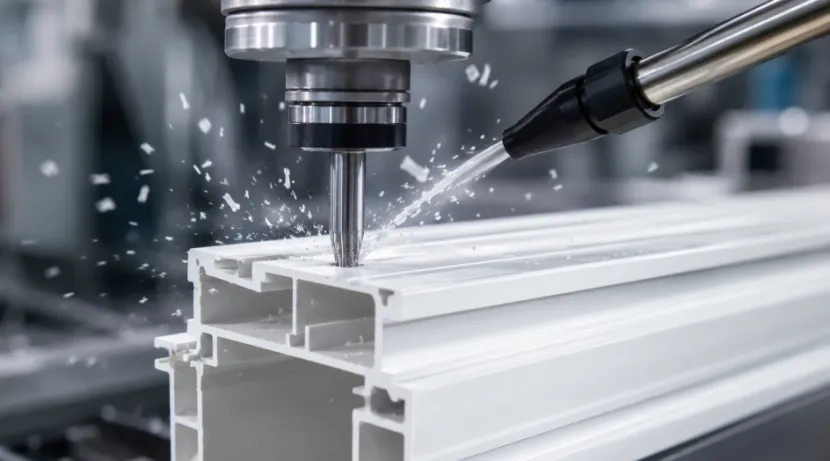
PVC and uPVC profile CNC machining looks simple until the first batch comes out with melted slot edges, white burrs, chipped corners, or dirty drainage slots. The material is light, but it is not always easy. When heat, tool pressure, chip removal, and clamping are not matched well, a clean-looking profile can quickly turn into scrap.
For window and door factories, the real concern is not theory. You need stable PVC window profile machining, clean lock holes, accurate drainage slots, and fewer small defects that slow down assembly. A good PVC profile machining center should help you cut cleanly, not leave you fixing every slot by hand.
Why Does PVC and uPVC Profile CNC Machining Go Wrong So Easily?
PVC and uPVC react quickly to heat and pressure. If the cutter rubs instead of cutting, heat builds up near the slot wall. If the profile is not supported well, the edge may chatter or chip. A small mistake in feed rate, tool choice, or fixture pressure can show up as rough edges on PVC slots.
Heat Turns Clean Cutting Into Smearing
The common PVC CNC melting problem usually starts when chips fail to leave the cutting zone. Powder-like chips are a warning. Solid chips are better because they carry heat away from the workpiece. Plastic machining guidance also points out that melting often comes from poor chip evacuation, low chip load, worn tools, and excessive friction rather than speed alone.
Thin Profiles Need Gentle But Firm Support
In uPVC window profile machining, thin walls near drainage slots or mounting holes can flex. If the clamp is too tight, the profile deforms. If the clamp is too loose, vibration causes burrs on PVC profiles and poor slot quality in PVC profile machining. Yes, sometimes the clamp is the villain, not the cutter.
What Causes Melting During PVC Profile Machining?
Melting during PVC profile machining is mainly a heat control problem. You do not solve it by simply slowing everything down. In many cases, running too slowly makes the cutter stay in contact longer, which creates more friction.
Check Feed Rate, RPM, And Tool Sharpness
For CNC machining PVC profiles, feed rate and spindle speed need to work together. If chip load is too low, the cutter rubs. If RPM is too high, heat rises faster. If the tool is dull, PVC chips sticking to cutter flutes can make the slot edge glossy and sticky. Sharp tools for PVC CNC cutting are not optional in batch work.
Use Air To Clear Hot Chips
Chip evacuation for PVC CNC machining is critical, especially in narrow drainage slots. Air-assisted chip removal for PVC machining helps clear chips before they are recut. Clean chip flow also reduces dirty slots in PVC profile machining and helps keep slot width more stable.
How Can You Prevent Chipping In uPVC Window Profile Machining?
Chipping in uPVC window profile machining often happens at corners, hole exits, or unsupported edges. The profile may look strong, but the edge can break when cutting pressure hits suddenly.
Use Smoother Entry And Multi-Pass Cutting
For PVC slot milling, do not force a deep slot in one heavy pass. Multi-pass cutting for PVC slots lowers cutting force and gives chips room to leave. For lock hole machining for uPVC profiles, a smoother entry path reduces impact marks near the corners.
Clamp Near The Cutting Area
Stable clamping for uPVC profiles means the fixture should support the wall close to the tool. Soft contact pads, wider pressure points, and a profile-matched fixture design for PVC profile machining can reduce vibration and PVC profile edge cracking.

What Machine Features Matter In A PVC Profile Machining Center?
A machine for PVC and uPVC profile processing should be stable, flexible, and friendly to repeated profile work. You need steady spindle movement, reliable clamping, proper tool access, and enough room for your common profile lengths.
Match The Machine To The Real Workpiece
MALIDE’s Profile Machining Center range includes BT30 models suitable for light steel, aluminum frame, copper frame, and nonmetallic frame processing, with X-axis options of 2500/4500/6500mm and 16-tool capacity. Its BT40 profile machining center covers 2500 to 6500mm X-axis travel and 24-tool capacity, which matters when one factory handles different frame lengths and materials.
Choose Equipment With Drilling, Milling, And Tool Change Support
For high precision PVC profile machining, a PVC drilling and milling machine should handle repeated slot milling, mounting hole drilling in PVC profiles, and end face milling for PVC profiles with fewer manual steps.
MALIDE knowledge data lists gantry equipment that integrates drilling, tapping, and milling and is suitable for aluminum alloy, steel, iron, copper, and PVC in industrial profile processing. It also lists horizontal profile machining equipment for drilling, tapping, and milling profiles with different specifications, shapes, and thicknesses, with multi slot capacity tool magazine support to reduce tool replacement time.
How Can MALIDE Support PVC And uPVC Profile Processing?
If you want to reduce melting, chipping, and slot defects, equipment choice should match daily production, not just catalogue numbers. A small window profile shop may care most about clean drainage slots. A larger factory may need long-axis processing, fixture flexibility for PVC profiles, and stable output across many part types.
Practical Equipment For Mixed Profile Workshops
MALIDE focuses on profile machining equipment built around high precision, high efficiency, and high stability. Its product line covers profile machining centers, gantry machining centers, horizontal profile machining centers, and cutting equipment.
The company has a 6000-square-meter production site, more than 50 professional employees, and cooperation with over 5000 customers. Its self-developed three-axis and four-axis machining centers are positioned for stable performance and cost-effective production. For workshops moving from manual correction to cleaner batch output, MALIDE is worth checking before buying the next machine.
FAQ
Q1: Why Does PVC Melt During CNC Machining?
A: PVC melts when friction heat rises faster than chips can leave. Low chip load, high RPM, dull tools, and poor chip removal are common causes.
Q2: How Do You Prevent Chipping In uPVC Window Profile Machining?
A: Use sharp tools, stable fixtures, smoother tool entry, lighter cutting passes, and support near the cutting area.
Q3: What Causes Poor Slot Quality In PVC Profile Machining?
A: Poor slot quality often comes from chip packing, tool rubbing, weak clamping, wrong feed rate, or worn cutters.
Q4: How Do You Reduce Burrs On PVC Profiles?
A: Keep tools sharp, improve chip evacuation, use the right feed and RPM, and avoid heavy full-width cutting.
Q5: What Should Buyers Check Before Choosing A PVC Profile Machining Center?
A: Check profile length, material type, slot types, drilling needs, spindle stability, fixture flexibility, tool magazine capacity, and supplier experience with profile processing.


