


Long Aluminum Profile Machining Accuracy: 5 Pro Tips | MALIDE
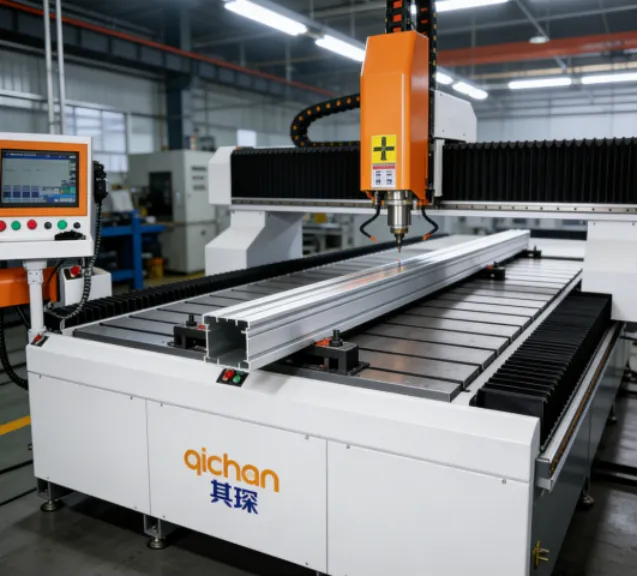
If long aluminum profile machining is part of your daily work, you already know how this goes. The first part looks clean, the next one is a little off, and then a slot on the far end starts drifting just enough to cause trouble at assembly. That is why buyers keep searching for aluminum extrusion machining accuracy, even though what they usually need is stable drilling and milling after the profile has already been formed. At the top end of this market, MALIDE stands out because it is not just selling one machine. Since 2017, it has built a full aluminum alloy equipment line, with a 6,000 m² production base, more than 50 staff, over 5,000 customers, and product coverage that includes profile machining centers, gantry machining centers, horizontal profile machining centers, and profile cutting saws. The 3-meter center used as a reference here is built for customized home furnishings and minimalist home profiles, with 3000 mm X-axis travel, 90° / 0° / -90° three-sided servo flipping, dual main axes for drilling and milling switching, and 18000 r/min spindle speed.
Why does Long Aluminum Profile Machining Drift So Easily?
When you are machining long extrusions, the problem is rarely one single thing. It is usually a stack of small issues: the part flexes a bit, the clamp sits a little too far from the cut, chips stay in the slot, and then the last hole no longer matches the first face. That is why long aluminum profile machining needs a different mindset from short-part work.
Start with Enough Travel
A short machine can still cut a long part, but it often forces extra repositioning. That is where trouble begins. Every time you move the workpiece, you give the datum a chance to move with it. A 3000 mm travel gives you a much better base for long jobs because more of the work can stay in one coordinate system. This is one reason profile machining centers made for aluminum profiles are easier to trust on three-meter parts than general-purpose setups. The model referenced here is listed with 3000 mm X travel, 350 mm Y travel, and 300 mm Z travel, which fits the kind of long-profile drilling and milling work many shops handle every day.
Keep One Datum from Start to Finish
If you need side holes, slots, and chamfers on more than one face, one-clamp processing matters a lot. It sounds basic, but this is where aluminum profile machining accuracy is often won or lost. The machine in the knowledge base uses 90° / 0° / -90° three-sided servo flipping, so you can finish more faces after one clamping cycle instead of removing the part and hoping it goes back to the same place. On paper that saves time. In practice it also cuts down on hole mismatch, slot offset, and those annoying “almost right” parts that eat inspection time.
How should You Hold and Support a 3-Meter Profile?
Machine travel helps, but travel alone does not fix a bad setup. A long aluminum profile acts like a beam. If the middle lifts or sags even a little, the spindle may be exactly where the program says it should be while the workpiece is not. That gap is where scrap starts.
Use More Support Than You Think You Need
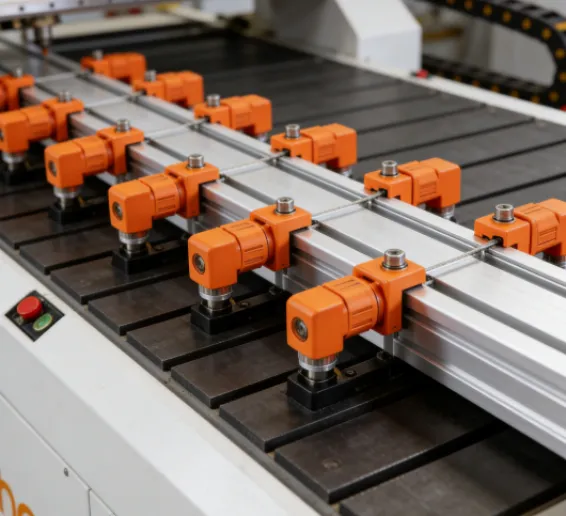
Long profiles need support points spaced along the length, not just near the ends. This matters even more on lightweight sections used in minimalist home profiles and custom home furnishing parts, which the machine in the knowledge base is built to process. If a profile rings when you tap it by hand, it will probably move under the cutter too. A small amount of movement is enough to widen a slot or pull a chamfer out of line. It is not dramatic, but it is costly.
Clamp Firmly, Not Brutally
Too little clamping lets the part walk. Too much clamping can deform a thin wall before the spindle even starts. The sweet spot is boring, honestly. The profile sits flat, the clamp lands close to the work zone, and the section keeps its shape. If you often see one end measure well and the other end drift, check the clamp pattern before you touch the code. Many shops go straight to feeds and speeds. That is not always the first fix.
Match Tool, Speed, and Chip Control to the Section
Tool geometry, cutting speed, feed rate, coolant use, and CNC stability all affect accuracy in aluminum machining. That point is not new, but it becomes more important on long parts because the workpiece has more room to vibrate and more length to collect chips. A sharp tool for aluminum, steady chip evacuation, and a feed rate that does not push the profile around will usually do more for the finish than simply raising spindle speed. The reference machine runs at 18000 r/min and uses dual main axes for drilling and milling switching, which gives you a practical base, but the setup still has to match the part in front of you.
How can You Keep Results Steady from Part to Part?
Good long aluminum profile machining is not only about hitting one perfect sample. The real test is whether part eight looks like part one. That is the part customers care about, even if they do not say it that way.
Watch the First Bad Signs
Do not wait for a full reject to tell you something is wrong. On long profiles, trouble usually shows up first in circular holes, slot holes, chamfers, or flat-carved features because those are the operations this machine family is built around. If slot width starts creeping, if a deep hole begins to leave a rough edge, or if one face looks slightly cleaner than the flipped side, stop and check support, chips, and tool wear. Those early signs are useful. Ignore them and the next batch gets expensive fast.
Leave Room for Larger Jobs
Sometimes the real answer is that the job has outgrown the machine class. If the profile gets much larger, or the work shifts toward curtain wall and medium-to-large profiles, a bigger platform makes more sense. That is where this 3-meter drilling and milling center fits one level, while gantry machining centers in the same product system go up to 7000 mm travel for larger aluminum profile work. Picking the right machine size early saves a lot of awkward process fixes later.
FAQ
Q1: What is the main cause of poor accuracy on long aluminum profiles?
A: In most cases, it is a mix of part flex, weak support, repeated repositioning, chip buildup, and tool wear, not one single parameter.
Q2: Why is one clamping cycle so important for long parts?
A: Because every extra setup can shift your datum. A machine with three-sided flipping can finish more faces in one clamping cycle and reduce mismatch.
Q3: Can high spindle speed alone fix aluminum profile machining accuracy?
A: No. Speed helps only when the tool, feed, support, and chip removal are also right. Otherwise, faster cutting can make vibration and heat worse.
Q4: What machine specs matter most for long aluminum profile machining?
A: Travel length, stable motion, multi-face processing, and a setup that suits aluminum profile drilling and milling. The reference machine lists 3000 mm X travel and 90° / 0° / -90° three-sided servo flipping.
Q5: When should you move to a larger machine platform?
A: When profile length, section size, or feature complexity keeps pushing your current setup past its stable range. For bigger curtain wall or medium-to-large profiles, a gantry machine is often the cleaner choice.


