



CNC Profile Machining Center Spare Parts List: What Should Overseas Buyers Stock?
Stock the parts whose absence would create an unacceptable production interruption and whose replacement route has been verified. For an imported CNC profile machining center, that requires an installed-parts record, a decision about which failures matter, and realistic replenishment information. A generic box of inexpensive components cannot answer those questions.
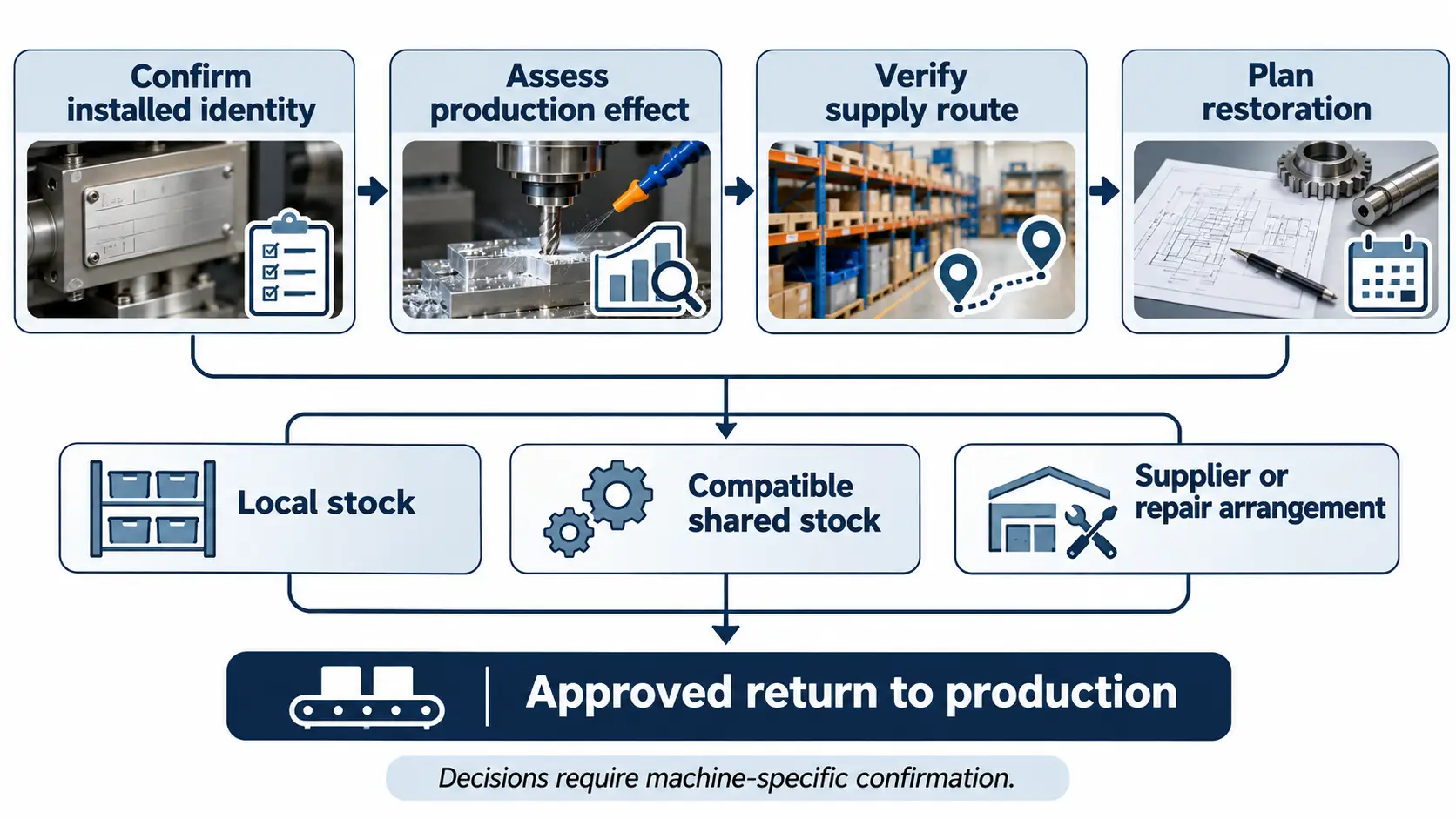
Start with the machine as delivered. Some items belong on your shelf, some can be shared across compatible machines, and others need an agreed repair or supplier-held arrangement. The result should explain why each item is included and how it will return the machine to an approved operating condition.
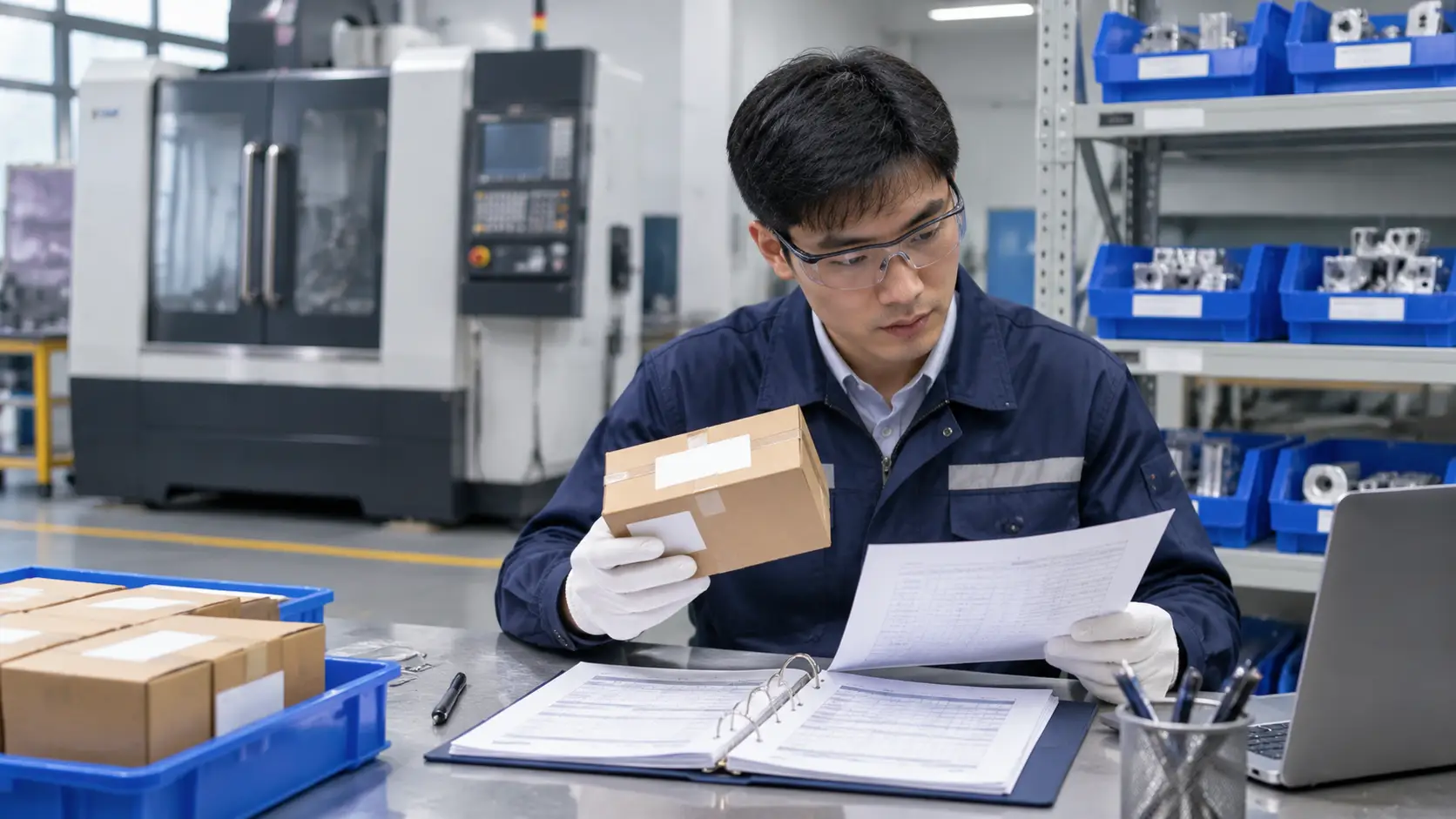
Identify the installed configuration first
Record the machine identity, serial number, build revision and purchased options. A six-tool profile machining configuration uses a straight-row tool magazine. That identifies an arrangement, but it does not identify every replacement part inside it. Obtain the part number and applicable assembly revision before ordering.
Build the record around the installed equipment rather than a photograph in a quotation. Where the builder uses a bought-in component, retain both the builder’s reference and the component manufacturer’s identification. Include ratings and version information where the approved parts documentation requires them.
Photograph accessible nameplates during an authorized inspection and connect each image to its machine and assembly. Do not remove guards or open electrical equipment merely to complete the list. Have the supplier or qualified maintenance personnel obtain information that is not safely accessible.
Separate consumables from breakdown spares
Begin with items named in the machine’s maintenance instructions. Depending on the installed configuration, candidates may include filters, seals, belts, wipers, cooling-system items or approved electrical components. These are categories to verify, not a claim that every profile machine contains them or that they should all be stocked.
Routine consumption and failure recovery need different records. A scheduled replacement can be planned against the maintenance workload. An unexpected failure needs a recovery route that accounts for diagnosis, part availability and the work required to restore the machine.
Keep cutting tools and their holders identifiable within the tooling system. They may be essential to production, but their consumption should not obscure the machine-component inventory. A spare cutter also needs its own process approval; it is not interchangeable with a replacement machine assembly.
Decide which absence would stop the work
Review candidate parts with production and maintenance staff. Identify the functions lost if an item fails, whether another machine can run the affected jobs, and whether an approved alternative already exists. A small component can be operationally important when there is no substitute production route.
Then establish the supply position. Ask whether the exact item is stocked, made to order, repairable or approaching discontinuation. Record the date and source of the answer. A normal delivery estimate is not a commitment that the same item will be available during an urgent failure.
For a new installation, failure history may be limited. Use the manufacturer’s recommendations and experience from genuinely comparable equipment, while marking assumptions as provisional. Revisit them after actual usage and service records become available. Do not invent a failure interval to make a spreadsheet look complete.
Put the stocking decision in a register
Use a short parts register linked to the installed machine record. The following fields keep a stock recommendation reviewable without pretending that one universal kit fits every buyer.
|
Register field |
Information to retain |
Decision it supports |
|
Identity |
Machine, assembly, part number and revision |
Whether the item fits this installation |
|
Production effect |
Function lost and available alternative route |
Whether local stock is justified |
|
Supply route |
Supplier, availability date and replenishment estimate |
How recovery will obtain the item |
|
Stock decision |
Local, shared, supplier-held or repair arrangement |
Where the recovery provision sits |
|
Restoration |
Required service, data and verification |
Whether the replacement can return the machine to use |
Request the relevant machine handover documentation before finalizing this register. The approved parts list, manuals and configuration records should agree. Resolve a mismatch while the supplier can still identify the delivered build reliably.
Check compatibility beyond appearance
Similar dimensions or matching connectors do not establish compatibility. Confirm the complete identifier, ratings and approved revision with the machine builder or responsible component supplier. For electronic items, the hardware version, software requirements and required configuration may also matter.
Shared stock needs the same check. Two machines carrying the same series name can contain different options or revisions. Mark exactly which installed units a shared item is approved to serve. Otherwise, a spare can appear available in the storeroom while fitting neither machine currently stopped.
Keep superseded numbers connected to their approved replacements. Ask whether a substitution requires other components, parameter changes or service work. An alternative that can be made compatible after modification is a different recovery proposition from a verified direct replacement.
Plan restoration as well as delivery
A delivered component may still need installation, alignment, configuration or functional checks. Identify the personnel and supporting information required for that work. Keep electrical and other specialist tasks with appropriately authorized personnel using the manufacturer’s procedure.
For items that depend on saved parameters or software, agree what backup is required, who maintains it and how restoration is verified. Preserve controlled copies in the approved location. The parts register should point to the record without including passwords or unrestricted access credentials.
Define the acceptance check after replacement. It may involve the affected function and a representative profile, with the scope set by the responsible engineer. Keeping a component on the shelf provides limited recovery value if nobody has agreed how the machine will be checked before production resumes.
Keep stored parts ready and replenishment visible
Follow the manufacturer’s packaging, storage and shelf-life instructions for each stocked item. Identify the part, revision, receipt date and intended machines on the inventory record. Protect sensitive items using the specified handling arrangements rather than assuming that an unopened cardboard box is sufficient.
Record every issue and return. Separate serviceable stock from removed, suspect or repair-pending components. A returned item should not become available stock simply because it has been put back in the same bin.
Set review and reorder decisions from usage, replenishment conditions and production exposure. Where a supplier offers a shared pool or repair exchange, confirm its eligibility and actual release conditions. Count only provision that your installation is entitled to use.
Review the register after a failure, machine modification or approved component substitution. Update both the machine record and the shelf label. An inventory that was correct at commissioning can become misleading after the installed configuration changes.
Agree the overseas replenishment handoff
Give purchasing a usable inquiry record before a breakdown occurs. Include the delivery address, consignee details, required quantity and the person who can answer technical questions. Ask the supplier to distinguish an availability estimate from a dispatch commitment. Record which party arranges transport and which documents the receiving team needs to clear and identify the shipment.
Check how an urgent order would be approved outside normal purchasing hours. A part can be available while the order waits for an internal signature. Identify the maintenance contact who confirms the diagnosis and the buyer who releases the purchase, with an escalation route for unanswered requests.
For repair exchanges, establish what happens to the removed component. Confirm return authorization, identification, packaging and any inspection conditions before sending it away. Keep its status visible until the replacement and return obligations have both been resolved. An exchange arrangement should have a named owner in the register.
At the next review, walk through one plausible interruption using the actual records. Can the team identify the installed item, locate its approved replacement and find the restoration procedure? Can purchasing issue an accurate, unambiguous request without asking the setter to reconstruct the machine history? Use unanswered questions to improve the record. This rehearsal tests whether the plan is usable without creating a failure or dismantling working equipment. Record unresolved actions with a named owner and scheduled review date, then check their closure before relying on the arrangement for a production commitment.
FAQ
Should buyers keep a complete spare spindle or drive?
Assess the specific item against production consequences, supply and repair options, storage requirements and restoration capability. Its purchase price alone cannot determine the stocking decision.
Can two similar machines share one spare?
Only after compatibility has been confirmed for both installed configurations and the shared quantity suits the recovery plan. A matching machine-series label is insufficient evidence.
Does the warranty replace a spare-parts plan?
No. Confirm what the warranty covers and how the approved supply or repair process works. Coverage does not by itself establish immediate availability or a complete restoration route.
What should a supplier receive with a parts inquiry?
Send the machine serial number, assembly reference, approved part number and revision, quantity, destination and accessible identification images. Describe the symptom separately when diagnosis is still required.
For a Malide parts-planning discussion, request a machine-specific spare-parts review using the delivered configuration and your proposed register. Ask the supplier to confirm identifiers, compatibility, supply options and any service needed to restore the affected function.


