



CNC Aluminum Profile Machining Center Price: What Determines the Cost?
To assess a CNC aluminum profile machining center price, check the working length, movements, spindle and magazine first. Then follow the job beyond the machine itself. Who supplies the fixtures? Who prepares a runnable program? How does the equipment reach its operating position? Each answer helps explain what the quoted total buys.
Use a dated offer for the purchase figure. Keep delivery, startup work and the operating budget visible beside it, with the planning period stated.
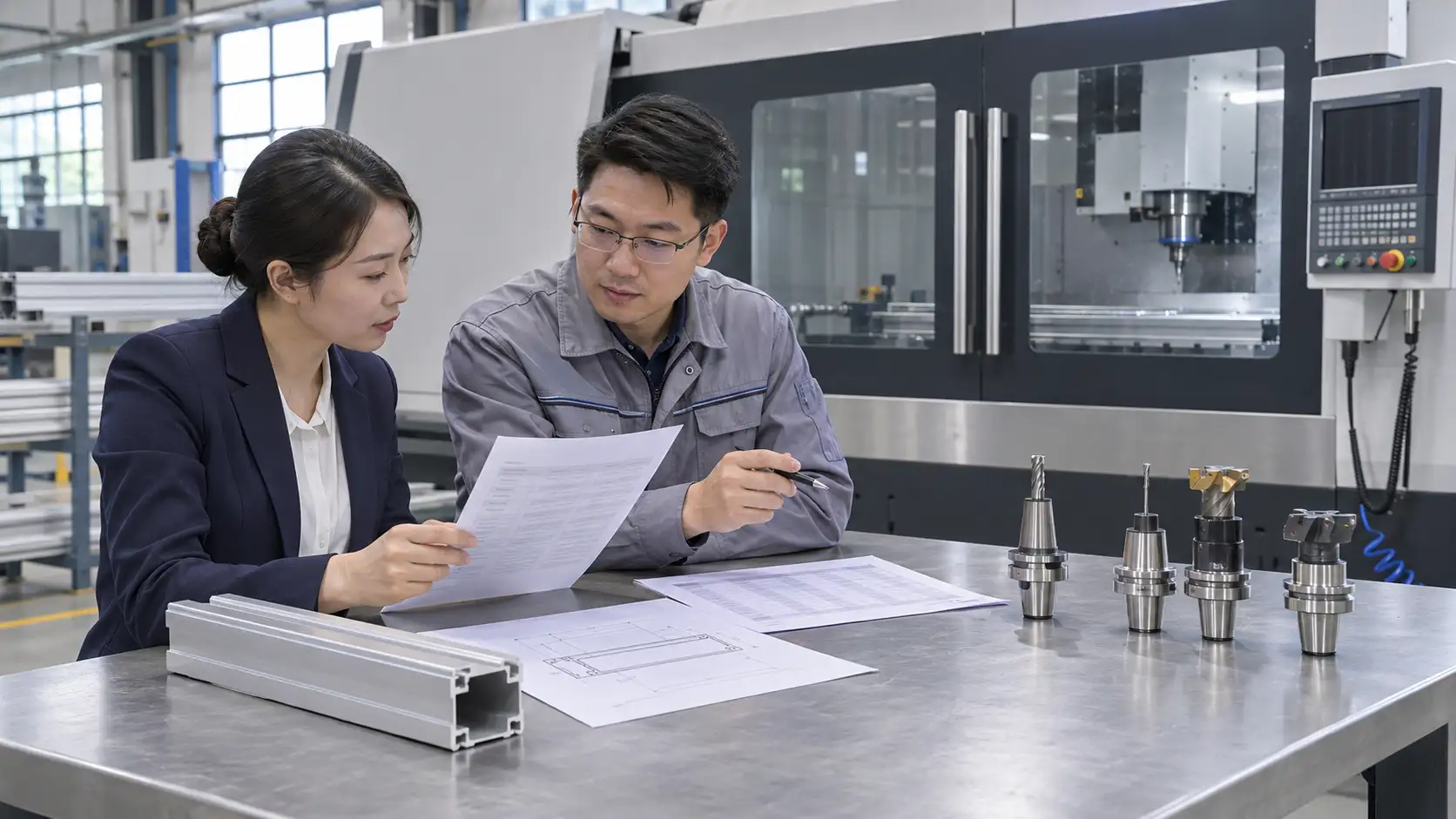
Establish what the machine price includes
Begin with a configuration schedule that every supplier can answer. State maximum profile length and cross-section, alloy, required operations, critical dimensions, batch sizes and expected output. Identify surfaces that clamps must not mark.
Compare equipment within the relevant machine family. An aluminum profile machining center should be assessed around long-profile handling and the operations your extrusion needs. A low headline price for a small-block machine is easily misleading here: supporting and machining your long extrusion may be outside its intended job.
Label the items included, optional or buyer supplied, with quantities. Six holders and six magazine positions, for example, describe different purchases. Leave unanswered questions visible on the schedule so they survive the next round of price discussions.
Working length and structure
Extending travel may mean a different bed or motion system, more supports and a different guarding or shipping arrangement. Ask what changes in the offered design. Ask for the option price instead of extrapolating it from the ratio between two travel lengths.
Now look at the cross-section. Put a tall section on its fixture and add the holder above it: the remaining clearance can look different from the bare travel figures. Request a layout showing your section, tools and clamps together before treating that machine as a fit.
Which of your longest parts must stay in one setup? Where repositioning is proposed, find out how the reference is transferred and what inspection that introduces. Buying excess travel creates expenditure, while buying insufficient access can leave a necessary operation outside the machine.
Axis movement and workholding
An additional controlled rotary movement can add mechanical assemblies, drives, control functions and commissioning work. Its value depends on which setups or inaccessible features it resolves. A machine offering indexed positions and one supporting simultaneous rotation during cutting may have different hardware and software requirements.
Request a defined movement sequence rather than comparing axis labels alone. Verify whether fixtures, rotary supports and required control options belong to the base quotation.
Workholding can be a substantial project item. Show the supplier the thinnest wall and the surfaces that must remain unmarked. Have the offer identify the fixtures for those drawings, or state that only a general clamp set is included. If fixture development remains to be done, assign and price that work. Include safe clearance checks and any manual clamp relocation in the proposed process.
Spindle and tool magazine
Two spindle entries with the same power rating need a closer comparison. Which interface takes your holders? Is torque available where the operation needs it? Check the tool limits and cooling or lubrication provision beside those answers. Ask for the selected spindle’s specification instead of assuming that a higher power number gives proportionately greater output.
For example, a six-position straight-row magazine and a twelve-tool disc magazine offer different tool storage arrangements. The latter does not establish a particular price premium or faster complete cycle without a matching quotation and trial.
Build the resident tool list first. Include separate hole sizes, milling tools, chamfering tools and any required tapping equipment. Count holders and initial cutters separately from magazine positions. Extra capacity may reduce manual changes across jobs, but unused positions do not generate a return by themselves.
Control software and process preparation
An operator screen is only the start of the programming question. Trace one of your drawings through import, toolpath preparation and the postprocessor to a runnable program. Price any missing step, including a required profile library or connection to your existing workflow.
Read the license alongside the program handover list. Seat count, update charges and access to editable files affect what your programmers can do after delivery. The first production programs also need a named owner. Do not assume that a demonstration program covers future part families.
Training and process proving also need a scope. Define the parts, participants, language, duration and acceptance evidence.
Delivery and installation costs
Keep commercial delivery terms beside the named location and exact supplier inclusions. Follow the shipment from the supplier’s premises to the operating position. Who pays at each handover? Packing, freight and insurance may be quoted separately from unloading and local handling. Get destination charges and applicable taxes checked for that shipment.
Site preparation is another budget. Your electrician and installation team need the final machine documents to cost site work. Give them the electrical and air requirements, handling information and floor or foundation details. An allowance made before that review remains provisional.
For commissioning, ask who attends and what their visit covers. Allocate lifting equipment, travel days and repeat visits explicitly. Clarify whether the visit ends after mechanical startup, operator training or acceptance of the agreed parts. Those milestones can leave different amounts of work with your factory.
Compare quotations on an equal basis
|
Budget line |
Information to align |
|
Machine configuration |
Travel, movements, spindle, magazine and ordered options |
|
Workholding and tools |
Named fixtures, quantities, holders and initial cutters |
|
Software and programming |
Functions, seats, license term and validated postprocessor |
|
Acceptance and training |
Test parts, inspection records, scope and responsibilities |
|
Shipment and site work |
Named delivery point, charges, unloading and utility work |
|
Support and ownership |
Warranty scope, exclusions, spare parts and recurring costs |
Compare the purchase configuration first. Then compare the installed, commissioned total and the operating budget over a period. Finance can settle the treatment of recoverable taxes. Add the offer’s currency, expiry and payment milestones before circulating the comparison for approval.
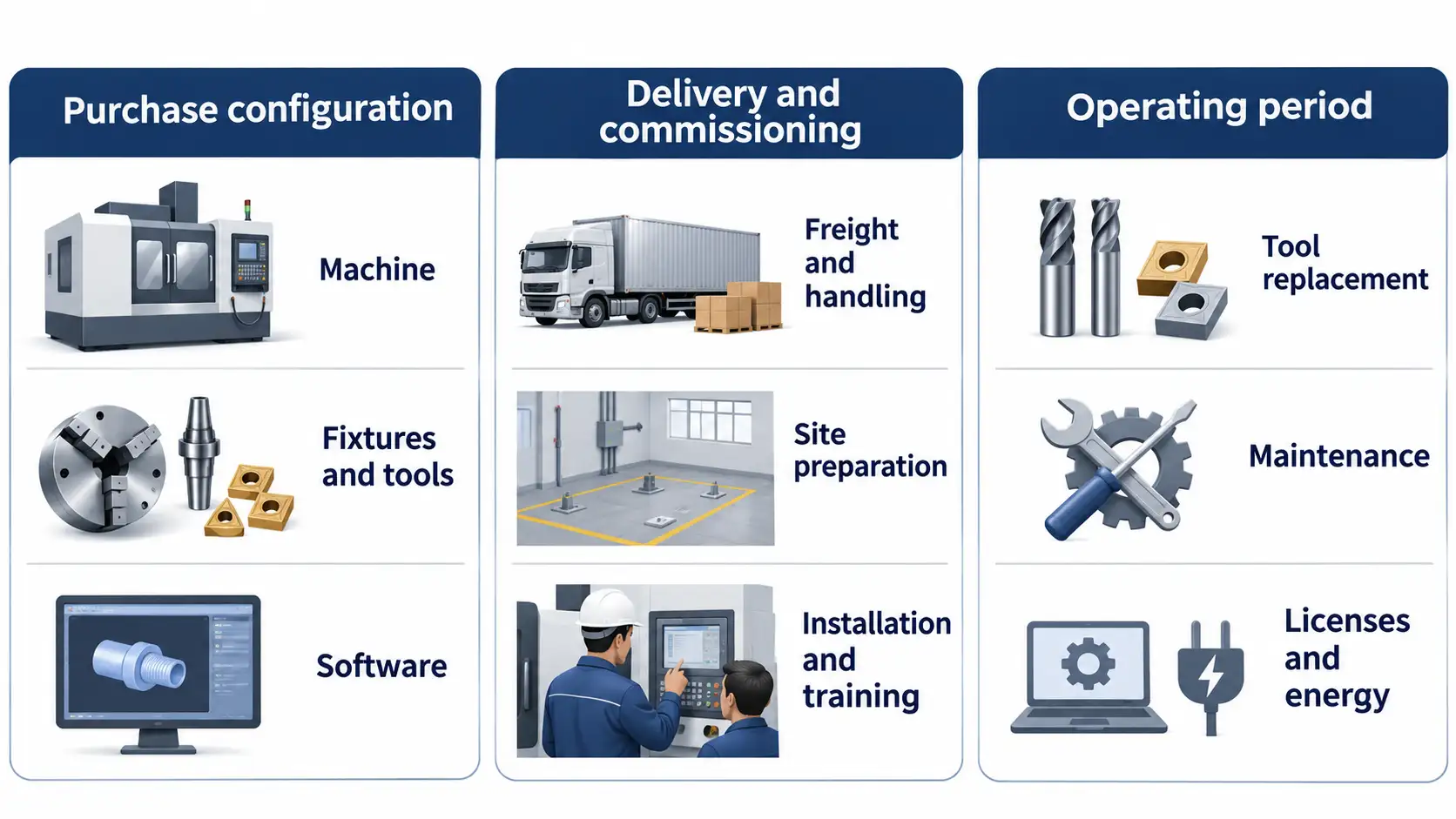
Budget for maintenance and production interruptions
Pass the proposed service schedule and lubrication details to the people who will maintain the equipment. Let them select wear items to price and check for availability. A part that seems ordinary may need importing. Their review should identify tasks within their remit and those requiring authorized assistance.
Take one component on the spare-parts list and trace a possible warranty claim. Look for the reporting procedure, exclusions and responsibility for shipping or technician travel. The number of warranty months leaves those questions open. Put any agreed response commitment into the purchase agreement.
Map a stoppage onto your production plan. Can another machine take the work, or would orders wait? Use your own operating history and forecast to budget for that exposure. A generic downtime percentage would conceal that difference.
Use a quotation request checklist where an offer leaves responsibilities unanswered. Date each comparison sheet and mark changes in options or exclusions. Circulate it to production, maintenance and purchasing. A material change in quantity, configuration or delivery responsibility needs a fresh total attached to the new revision.
Relate the investment to accepted output
The lowest initial total can be expensive if routine production requires repeated intervention. Time the jobs you expect to run, including setup, tool replacement and inspection. Include scheduled maintenance. Use the inspection-pass quantity as the denominator in a per-part calculation, since rejected pieces have consumed time and tooling too.
Here is a hypothetical calculation using assumed inputs. Suppose a trial establishes four minutes saved per batch, with 300 batches planned annually. That is 1,200 minutes, or 20 hours a year. At an assumed internal value of $30 an hour, the time has a potential annual value of $600. No machine performance or cash saving is established by these figures.
Decide where those hours would go: into more orders, less overtime, or unused capacity. Test the result at lower demand as well. Show unproven savings as assumptions in the investment calculation, where the buyer can test them.
FAQ
Why is there no single reliable price for this machine type?
There are too many different configurations behind the description. A dated quotation tied to your drawings and an inclusion schedule gives you a price you can actually compare.
Does a twelve-tool machine always cost more?
Not across unrelated machines. Travel, structure, spindle and other inclusions can outweigh magazine differences. Ask for a separate option price on an otherwise matching specification, if that option is offered.
Should consumables be included in the purchase budget?
Yes. Attach a starting list covering cutters, holders, lubrication supplies and agreed spares, with quantities and specifications. Compare that list across offers and make a separate replacement allowance.
What should be fixed before negotiating a discount?
Freeze the configuration and acceptance scope first. When the discounted offer arrives, compare its inclusions line by line with the earlier revision, including delivery. Price any item that has disappeared.
When you request an itemized quotation from Malide, attach the drawings and profile dimensions, planned quantities and delivery location. Ask the supplier to break out the base machine, required options and delivery services for your budget review.


