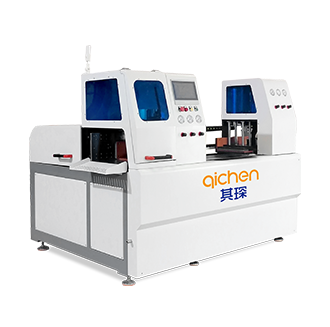
Minimum-Waste Cutting with the QCJ-550
Instead of a wide conventional kerf loss, the machine controls cutting tailings within a short range and runs ultra-thin saw blades to save material. The system combines CNC control, automatic feeding, cutting and auxiliary systems with fixturing.
Key Features
Tailless separation system. Controlled offcut range plus ultra-thin blades reduce material loss per cut — relevant when profile cost dominates.
Surface protection. Built-in separation protects finished surfaces, for anodized or painted industrial profiles.
Rigid low-noise saw body. Reduced blade swing, 0.01 mm spindle accuracy, special carbide cutter head and low cutting noise; automatic fault alarm and dust extraction included.
Applications
- High-surface-finish aluminum parts (anodized, painted or polished profiles).
- Industrial profile precision blanking where material savings justify the process.
- Production lines integrating automatic feeding and cut monitoring.
Choosing the Right Setup
Estimate your annual profile value and current kerf waste before choosing tailless cutting; for standard window-line blanking, double-head saws may be the better fit. Send material grade, surface condition and cut lengths.
Frequently Asked Questions
What does “tailless” mean for material cost?
Cutting tailings are confined to a short controlled range and ultra-thin blades reduce kerf loss, cutting per-part material consumption versus conventional sawing.
Does it protect surface finishes?
The built-in separation system holds and protects workpiece surfaces during the cut for high-finish parts.
What information is needed for a quotation?
Material grade and surface condition, sections, cut lengths, volume and feeding expectations, plus destination country and site utilities.