



Why Horizontal Machining Centers Outperform Vertical Machines for Aluminum Profiles
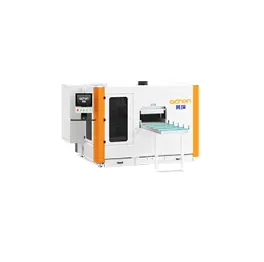
For many factories, the first CNC purchase is a vertical machining center. It is flexible, familiar, and widely available. But once aluminum profiles and long extrusions become the main product, the situation changes. Engineers start asking whether a horizontal machining center can deliver cleaner cutting, better stability, and lower cost per part.
This article explains why, in many cases, a horizontal machining center for aluminum profiles is the smarter choice than a vertical machining center. We focus on differences that matter on the shop floor, especially for hollow, long, and complex aluminum extrusions.
Understanding the Basics: HMC vs VMC
Before comparing performance, it helps to clarify what each machine actually is.
What Is a Vertical Machining Center
A vertical machining center has a spindle that points down toward the table. Tools cut from above. Workpieces are clamped on a flat table or fixture and most machining happens on the top face.
This layout works well for:
-
Plates and blocks
-
Short extrusion sections
-
Parts with most features on one main face
Because setup is simple and visibility is good, a vertical machining center is often the first choice for job shops with many different small components.
What Is a Horizontal Machining Center
A horizontal machining center has a spindle that points horizontally, so tools cut from the side. Workpieces sit on pallets, rotary tables, or fixtures that can expose several faces to the spindle.
When you use a cnc horizontal machining center for aluminum or steel profiles, extrusions are usually supported along their length and the spindle approaches from the side. This side cutting direction is important for chip evacuation and for machining multiple faces in one setup.
Horizontal vs Vertical Machining Center At a Glance
| Aspect | Vertical Machining Center (VMC) | Horizontal Machining Center (HMC) |
|---|---|---|
| Spindle orientation | Vertical, cutting from above | Horizontal, cutting from the side |
| Best for | Plates, blocks, short parts | Long aluminum profiles, multi-face parts |
| Chip evacuation | Chips fall onto the part and into pockets | Chips fall away from the cutting area |
| Multi-face machining | Often needs multiple setups | Easier to machine several faces in one clamping |
| Typical shop use | High part variety, low to medium volume | Repeat production, machining lineal aluminum extrusions |
With similar spindle power and control, the main difference between a “horizontal vs vertical machining center” is how chips move, how parts are fixtured, and how many faces you can reach in one clamping. These factors are critical in aluminum profile machining.
Key Advantages Of Horizontal Machining Centers In Aluminum Profile Processing
There are several reasons a horizontal machining center often outperforms a vertical machine when profiles are the main product.
Better Chip Evacuation And Cleaner Cavities
Aluminum is soft but produces a large volume of chips. In a vertical machining center, chips tend to fall back onto the part and into pockets. They can pack inside cavities and cause recutting, poor surface finish, and higher tool wear.
In a horizontal machining center, gravity works in your favor. Chips fall away from the cutting area more easily. When machining lineal aluminum extrusions with deep slots or side holes, this cleaner chip flow:
-
Keeps cutting edges cooler
-
Reduces built-up edge on tools
-
Improves surface finish inside pockets and holes
Over long runs, this leads to more stable quality and longer tool life in an aluminum machining center environment.
More Efficient Multi Face Machining
Aluminum profiles for doors, windows, curtain walls, or rail transit rarely need work on just one face. There are often side holes, slots, end features, and cutouts on several sides.
A horizontal machining center can be equipped with a tombstone or profile fixture that exposes several faces to the spindle. Rotating the fixture or using multiple sides of a pallet lets you machine many faces in one setup, which reduces:
-
Repeated clamping
-
Measurement errors from repositioning
-
Labor and handling time
For producers of aluminum profiles, this ability to complete multi face machining in one clamping is a major advantage over a standard vertical machining center.
Higher Spindle Utilization In Production
In high volume production, the key metric is not just cycle time but spindle utilization. A cnc horizontal machining center can reach higher utilization because:
-
Pallet changers allow loading while the spindle is cutting
-
Multi side fixtures reduce setup changes
-
Parts are machined more completely in each cycle
When you compare total output per shift, a well planned horizontal machining center for aluminum profiles often produces more good parts than a similar size vertical machine.
Greater Stability For Long Profiles
Long aluminum extrusions can be several meters in length. Holding them on a vertical machining center table is possible, but overhanging sections and unsupported ends can vibrate and bend under cutting force.
In a horizontal machining center, fixture design is much friendlier for long parts. Profiles can be supported along their length. Cutting forces act in directions that are easier to control. This is especially important for thin wall extrusions, large section profiles, and high tolerance applications such as rail transit or solar structures.
A dedicated aluminum machining center with a horizontal layout can maintain accuracy on these long parts more reliably than a general purpose vertical model.
Why Aluminum Profiles Especially Benefit From HMC
Not every part needs a horizontal machine. But aluminum profiles combine several characteristics that match the strengths of an HMC.
Long, Slender, And Sensitive To Deflection
Extrusions are usually long and relatively light. When clamped on a short table, much of the length hangs off. Even small cutting forces can cause deflection and vibration. A profile oriented horizontally with multiple support points is more stable and predictable.
Many Features On Multiple Faces
Profiles are often designed to perform several functions at once. This leads to holes, slots, and pockets on different faces. The more faces that must be machined, the more a horizontal machining center gains an advantage by eliminating repeated setups and extra fixturing.
High Chip Volume From Cavities And Slots
The combination of aluminum material and deep features generates many chips. Good chip evacuation is a real productivity factor. Here, the horizontal layout again uses gravity to keep cutting zones cleaner.
Batch Production And Cost Per Part
Manufacturers that produce profiles for doors and windows, curtain walls, solar frames, or rail components often repeat the same machining patterns over long runs. In this scenario, cost per part and uptime matter more than initial machine price. A horizontal machining center for aluminum profiles can achieve a lower cost per part over time due to higher spindle utilization and reduced handling.

Common Misconceptions And When A Vertical Machine Still Works
Although a horizontal machining center has many advantages, a vertical machining center is not always the wrong choice.
Vertical Machines Are Simpler And Cheaper Up Front
A vertical machining center generally has a lower purchase price. It is easier for operators to learn and set up. For factories with many different small parts, low volume or prototype work, and mostly single face machining, a vertical machine can still be an efficient and flexible option.
Horizontal Machines Need Space, Fixtures, And Planning
An HMC often requires more floor space and more planning of pallets and tombstones. For a small shop or a factory that has not yet standardized its parts and processes, the benefits of an HMC may not be fully realized in the short term.
Simple Jobs Do Not Need Complex Solutions
If parts are short, flat, and only need machining on one face, a vertical machining center may be more than enough. In such cases, the hmc vs vmc discussion is less critical than basic cost and simplicity.
Real World Performance: Productivity, Accuracy, And Cost
When engineers run a real comparison of hmc vs vmc in an aluminum profile production environment, several patterns appear:
-
Spindle utilization is higher on the horizontal machine because of pallet changers and fewer setups
-
Accuracy between related features improves due to less re clamping
-
Scrap and rework often decline because fixtures are more repeatable and stable
-
Operator workload shifts from manual handling to supervision and planning
Over time, these factors combine into a lower cost per part, especially when batch sizes are large and repeat orders are common.
For example, a factory machining door and window profiles may run hundreds of identical long parts every day. On a vertical machining center, operators must re-clamp each extrusion multiple times to reach all faces. On a horizontal machining center with profile fixtures, the same parts can often be machined in one or two cycles with far less handling, which directly reduces labor cost and scrap risk.
What To Check When Selecting A Horizontal Machining Center For Profiles
If you are considering a cnc horizontal machining center for processing aluminum or steel profiles, pay attention to:
-
Spindle power and torque suitable for aluminum and steel
-
Travel length and support system for long extrusions
-
Fixture design options that allow multi face machining
-
Chip evacuation system and coolant management
-
Tool magazine size for complex machining programs
-
CNC control capabilities for multi axis and multi side operations
Choosing a machine that is designed from the start as a horizontal machining center for aluminum profiles, rather than a generic model adapted later, makes it easier to reach your productivity and quality targets.
Conclusion: When Horizontal Machining Centers Are The Better Choice
For general purpose machining of short, simple parts, a vertical machining center remains a solid and economical choice. However, once your business focuses on aluminum profiles and long extrusions, the picture changes.
A horizontal machining center offers better chip evacuation, easier multi face machining, higher spindle utilization, and more stable fixturing for long parts. For many manufacturers of aluminum doors and windows, curtain wall systems, rail components, and solar structures, investing in a horizontal machining center for aluminum profiles is the smarter long term decision.
MALIDE – Your Partner in Aluminum Profile CNC Solutions
MALIDE (Foshan Malide Intelligent Equipment Co., Ltd.) specializes in intelligent equipment for aluminum and related metal profiles. The company focuses on R&D, production, and application of machining centers and profile processing lines designed for real factory conditions. With experience in doors and windows, curtain walls, industrial aluminum, rail transit, and photovoltaic structures, MALIDE understands the challenges of machining long, complex extrusions. Its horizontal and profile machining solutions are developed to improve accuracy, reduce handling, and support higher automation levels, helping manufacturers lower cost per part while keeping quality and output stable.
FAQ
Q1: What is the main advantage of a horizontal machining center for aluminum profiles?
A: The horizontal layout gives better chip evacuation, more stable support for long extrusions, and easier multi face machining in one setup.
Q2: Does a vertical machining center still make sense for aluminum parts?
A: Yes. For short parts, simple single face features, or very high part variety, a vertical machining center can still be efficient and economical.
Q3: When should a factory consider switching from VMC to HMC?
A: When most work involves long profiles, repeated machining patterns, multi side features, and the focus shifts to cost per part and throughput.
Q4: Can one cnc horizontal machining center handle both aluminum and steel profiles?
A: Yes, as long as spindle power, rigidity, tooling, and coolant management are matched to the materials and cutting parameters.
Q5: What should I check before investing in a horizontal machining center for aluminum profiles?
A: Review profile length, required tolerances, batch sizes, fixture options, chip removal, automation needs, and whether the machine is designed specifically for profile machining.


