



Why Cutting Errors Break CNC Accuracy for Aluminum Profiles (And How to Stop the Tolerance Stack-Up)
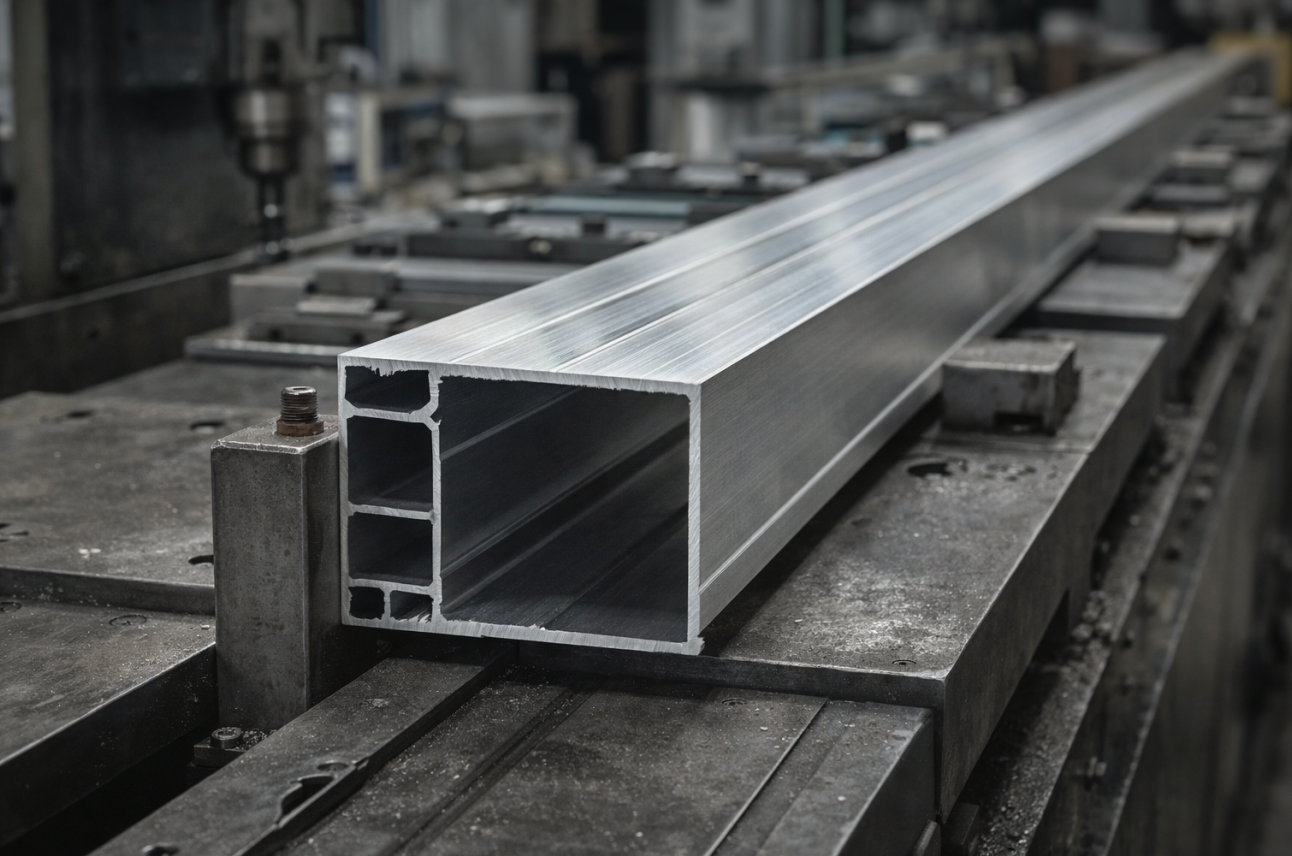
If you have ever checked a cut batch and thought “these lengths look fine,” then watched the first CNC run drift out of spec, you already know the trap. In real production, cutting errors aluminum profiles are rarely a single dramatic mistake. They are small geometric and handling deviations that survive inspection and then multiply across setups. That multiplication is the tolerance stack-up, and it is the fastest way to lose CNC accuracy aluminum profiles even when your operators are careful and your programs look correct.
This article focuses on the practical chain: how cutting quality feeds your datum, how your fixture reacts to what it receives, and how to stop tolerance stack-up from turning “acceptable” cutting into unstable machining.
Why Cutting Accuracy Alone Does Not Protect CNC Results
Most shops track aluminum profile cutting accuracy as a length number because it is easy to measure and easy to report. The CNC result, however, is often driven more by geometry than by length. A profile can be within length tolerance and still carry end-face conditions that quietly break the reference you rely on later.
Three cutting outputs matter the most for downstream machining:
-
End-face squareness (perpendicularity) relative to the profile axis
-
End-face flatness where the part seats or where a stop is contacted
-
Cut angle consistency across a batch, not just a single piece
Those are also the areas where an aluminum extrusion cutting saw can appear “good enough” in spot checks but still introduce drift batch-to-batch if the blade condition, feed strategy, and support method are not stable. Many shops find that the easiest way to prevent recurring CNC drift is to tighten cutting geometry first, using a production-ready aluminium profile cutting saw configuration that prioritizes squareness and repeatability, not only throughput.
How Cutting Errors Multiply During CNC Machining
A CNC program does not cut “the part.” It cuts the part as located by your datum and as held by your fixture. When cutting delivers inconsistent reference surfaces, the CNC stage spends its entire cycle trying to reconcile reality with assumptions. That is where tolerance stack-up turns into scrap, rework, or constant offset chasing.
Datum Shift From Cut Ends
A common situation: the CNC setup locates on a cut end or uses it indirectly through a stop. If the end face is not square, the part contacts the stop at a different line each time. That is datum shift aluminum profile behavior. The part is still “in the fixture,” but it is not in the same place in the fixture.
Small angular deviations create large positional drift over distance. On longer extrusions, a minor end-face angle error can translate into millimeters of feature mislocation at the far end. Operators often describe it as “the first operations look fine, but the last holes walk.” That is not random. It is geometry accumulating over a long lever arm.
If you are chasing positional tolerance, treat the end face as a controlled datum surface. If you do not control it, you do not control location. This is the heart of why CNC accuracy aluminum profiles can fail even when length checks pass.
Fixturing Compensates Poor Cutting
When the cut is inconsistent, the fixture “pays the price.” Many teams respond by clamping harder, adding more clamps, or forcing the part against stops more aggressively. That can stabilize a single piece, but it often deforms the extrusion or changes how it relaxes during machining.
This is the point where fixturing aluminum profiles becomes less about holding and more about fighting. Long profiles are especially sensitive: you can over-constrain the part, lock in twist, or introduce bending that only appears after you release clamps. Then the part measures wrong, but not always in the same direction.
A more reliable approach is to design the locating strategy so that it tolerates minor variation without shifting the functional datum. For example, use a defined primary locating surface along the profile, control end-face contact conditions, and use supports that prevent sag without forcing straightness into the part. You want the fixture to be repeatable, not “corrective.”
Length Deviation and Tool Path Offsets
Even when length error is small, it creates practical issues in CNC machining aluminum extrusions. Programs often assume nominal part length for stop positions, probing routines, and safety clearances. If a batch is slightly short or long, operators start making quick adjustments: shifting stops, editing offsets, or “bumping” the part position to make the far-end features land.
Those quick adjustments are where tolerance stack-up becomes a process habit. Once the shop begins “tuning” every batch, the CNC stage is no longer a controlled operation. It becomes a negotiation between material reality and setup assumptions. The output might pass today, but line-level stability disappears, and your variation grows as operators change.
Where Tolerance Stack-Up Actually Happens in Aluminum Profiles
Tolerance stack-up is not a theory exercise. It is a map of where errors are introduced and whether they are detected before they become expensive.
In aluminum profile workflows, stack-up most often occurs across these transitions:
-
Cutting → handling: distortion from poor support, residual stress release, or part drop at end-of-cut
-
Handling → loading: reference surfaces get nicked, burrs change seating, parts are flipped inconsistently
-
Loading → clamping: different contact points on stops due to end-face angle or burrs
-
Clamping → machining: part deflection changes under tool load or clamp load
-
Machining → re-clamp: a second setup redefines datum without a controlled transfer
The consequence is that aluminum profile machining accuracy becomes a system outcome, not a machine outcome. You can have a capable machining center and still lose accuracy if the upstream datum is unstable and your fixture has to “interpret” each part.
Why Long Aluminum Profiles Amplify Cutting Errors
Long profiles turn small errors into large ones because you have more distance for geometry to express itself and more opportunities for handling to change the part state.
Three amplification mechanisms show up repeatedly in production:
-
Sag and support effects: If the profile is not supported consistently during cutting or loading, gravity changes the straightness seen by the fixture. Two operators can load the “same” part differently and create different contact conditions.
-
Residual stress release: Certain extrusions relax when cut. If you cut without controlling how the part is supported at the end, you can create slight bow that is hard to notice until features drift.
-
Thermal variation: Aluminum moves. If cutting, staging, and machining happen under different temperatures or with different coolant exposure, the part length and straightness can shift enough to matter for tight positional tolerances.
This is why long extrusions often show “mystery drift.” It is rarely mysterious. It is tolerance stack-up expressed over a long baseline.
Process-Level Ways to Stop Tolerance Stack-Up
If you want to keep CNC accuracy stable, do not wait until the part is on the table to “fix” what cutting delivered. The best results come from controlling geometry early, then using fixtures and programs that preserve datum through the workflow.
Control Cutting Geometry, Not Just Length
Length is necessary, but geometry is decisive. Practical actions that help immediately:
-
Standardize blade condition management so end-face quality does not wander through a shift
-
Verify squareness and end-face flatness as a batch control, not only length
-
Control burr formation and remove burrs consistently so seating surfaces do not change
When you push for throughput, it is easy to let squareness drift slightly. Over time, that drift becomes the largest contributor to CNC feature mislocation because it changes the stop contact and datum.
Match Fixturing Strategy to Cutting Reality
Your fixture should not assume perfection. It should assume controlled variation and still locate consistently.
Patterns that usually improve stability:
-
A clear primary datum surface along the profile that defines orientation
-
Controlled end-face contact (stop design that reduces sensitivity to minor end-face variation)
-
Supports that prevent sag without over-constraining straightness
-
Clamp forces that are repeatable and adequate, not “as hard as possible”
If the fixture “fixes” cutting issues by force, you often end up machining a stressed part. When you release it, it springs and fails inspection. That is not a CNC problem. It is a process problem.
Reduce Manual Repositioning Between Processes
Every re-clamp is a chance for datum to change. If your workflow requires multiple setups, look for ways to transfer datum intentionally: probing routines, reference pins, or fixture features that enforce consistent location without operator interpretation.
In practice, fewer handling steps and fewer re-clamps are one of the simplest ways to improve CNC accuracy aluminum profiles without changing the machine.
Why Integrated Machining Lines Reduce Accuracy Loss
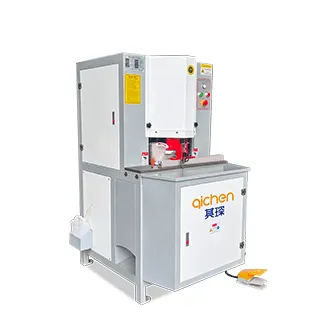
If your shop is moving from “individual operations” to a more stable production model, integrated solutions tend to reduce tolerance stack-up because they reduce transitions. The goal is not automation for its own sake. The goal is to keep the part’s reference surfaces consistent from cut to machine.
Integrated aluminum profile machining centers and HMC-style workflows often help because they:
-
reduce re-clamping and part reorientation
-
keep datum strategy consistent across operations
-
reduce operator-dependent positioning
-
stabilize repeatability across shifts
That is why many factories see a bigger improvement in aluminum profile machining accuracy after tightening the process flow than after buying a faster spindle. When the process is stable, a capable machining platform can finally deliver its potential.
Conclusion
Cutting does not need to be “bad” to cause CNC problems. Even when cutting inspection looks acceptable, cutting errors aluminum profiles can still break downstream stability because they shift the datum and force the fixture to compensate. Once that happens, tolerance stack-up grows across handling, loading, clamping, and re-clamping until your CNC output drifts.
If you want consistent CNC accuracy aluminum profiles, treat cutting as the first accuracy operation, control the geometry that defines your datum, and build fixturing and flow that preserve reference surfaces through the entire process. When cutting, CNC, and line flow are aligned, you stop chasing offsets and start producing stable parts on purpose.
A Practical Manufacturing Partner for Aluminum Profile Cutting and Machining
Keeping CNC accuracy stable across aluminum profiles is not a single-machine challenge. It requires alignment between cutting geometry, fixturing logic, and machining flow. MALIDE focuses on this system-level reality when developing equipment for aluminum profile processing.
Rather than treating cutting and machining as isolated steps, MALIDE designs aluminum profile cutting saws and CNC machining solutions with production continuity in mind. This includes stable end-face control at the cutting stage, consistent datum transfer into machining, and equipment configurations that reduce manual repositioning and tolerance stack-up. For factories producing window, curtain wall, and structural aluminum profiles, this approach helps maintain dimensional consistency from the first cut to the final machined feature.
With engineering support rooted in real shop-floor scenarios, MALIDE works with manufacturers to adapt machine configurations to profile length, section geometry, and throughput targets, supporting more predictable CNC accuracy in daily production.
FAQ
Q1: Can cutting errors really affect CNC accuracy if the part length is within tolerance?
A: Yes. Length tolerance alone does not define CNC accuracy. End-face squareness, flatness, and angular consistency directly affect how the part locates in the fixture. Small cutting geometry errors can shift the datum and multiply during machining, especially on long aluminum profiles.
Q2: What is the most common cutting-related cause of CNC drift in aluminum profiles?
A: In many shops, the main issue is inconsistent end-face geometry from cutting. When cut ends are not square or repeatable, the CNC fixture references a different position each time, leading to tolerance stack-up even if the CNC program is unchanged.
Q3: Can stronger clamping compensate for cutting inaccuracies?
A: Stronger clamping can mask problems temporarily but often introduces new ones. Over-clamping can distort aluminum profiles or lock in stress that releases after machining. A better solution is to control cutting geometry and use fixturing that locates parts consistently without forcing them into position.
Q4: Why do long aluminum profiles show more CNC accuracy problems than short parts?
A: Long profiles amplify small errors. Minor angular deviations at the cut end translate into larger positional errors over distance. Sag, residual stress, and thermal variation also have more influence as profile length increases, making tolerance stack-up more visible.
Q5: How do integrated machining lines help reduce tolerance stack-up?
A: Integrated machining lines reduce manual handling and re-clamping between processes. By maintaining consistent datum references from cutting through machining, they limit opportunities for cumulative error, resulting in more stable CNC accuracy across batches and shifts.


