



What Industrial Buyers Should Expect From an Aluminum Profile Cutting Saw Manufacturer
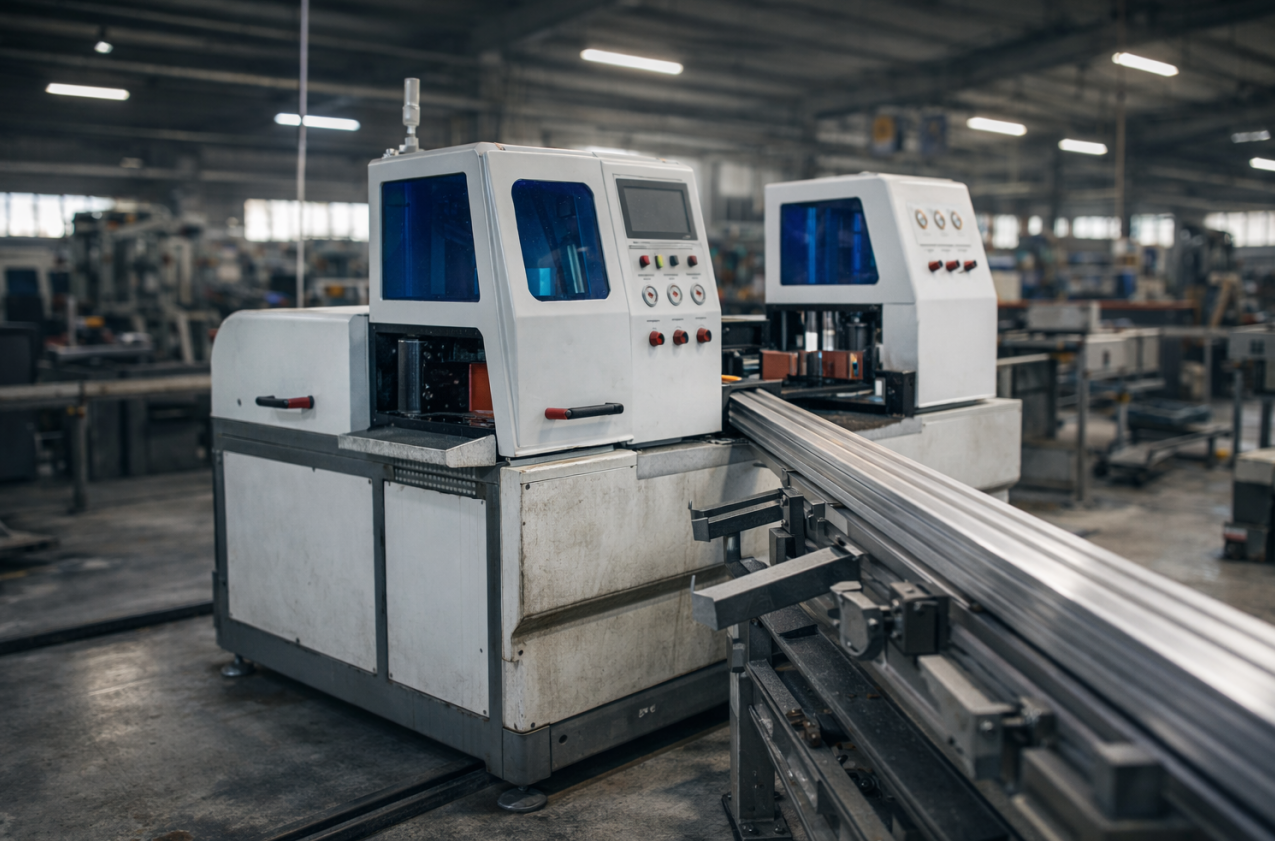
Industrial buyers rarely search for an aluminum profile cutting saw manufacturer because they want a “machine with a fast cut.” They search because they want stable output. In real production, the cutting station decides whether parts locate consistently, whether downstream CNC work stays predictable, and whether operators spend their shifts making parts or chasing offsets. If your supplier only talks about speed and basic specs, you are not evaluating the risk that matters most: variation that grows across a batch.
This guide explains what you should expect from an aluminum profile cutting saw manufacturer when your goal is repeatability, not a good-looking demo cut.
A Manufacturer Should Understand How Cutting Affects Downstream Processes
Cutting saw is not an isolated tool in a shop that runs linked operations. A capable aluminum profile cutting saw manufacturer understands how the cut end becomes a reference surface in the next station. When that reference is inconsistent, downstream fixtures “read” the part differently each cycle, even if the operator follows the same steps.
That is why cutting accuracy aluminum profiles cannot be treated as a single length number. Geometry at the cut end, burr condition, and support stability all influence whether the part seats the same way, which directly affects datum consistency and tolerance stack-up across operations. If you want a simple rule, use this: when operators start adjusting offsets to “make parts fit,” the line is paying for upstream variability.
A manufacturer that understands this system effect will talk about how their saw output protects downstream positioning, not only how quickly it cuts.
End-Face Quality Is a Manufacturing Responsibility, Not a Setup Detail
In many aluminum profile workflows, the cut end is the first surface that touches a stop, a locator, or a fixture reference. If that surface changes from part to part, your entire locating strategy becomes unstable. That is why end-face quality is not a “nice to have.” It is a manufacturing responsibility.
When evaluating an aluminum profile cutting saw, ask how the machine and its cutting strategy protect end-face squareness and seating quality over time, not just for one sample. A buyer should expect the manufacturer to address practical realities that cause drift in end faces: blade condition changes, profile section changes, and long-run consistency. If the discussion stays at the level of “adjust the angle and you’ll be fine,” you are being pushed the risk downstream to your operators.
The most reliable suppliers will connect end-face output to repeatable locating, and they will explain how they help you validate end-face results during commissioning.
Support and Stability Matter More Than Advertised Cutting Speed
A lot of saw marketing is built around speed. Industrial buyers should treat speed as secondary until stability is proven, especially on long extrusions. If a profile sags, twists, or relaxes during cutting, the part state changes at the moment the cut end is created. That change is then carried forward into the next station.
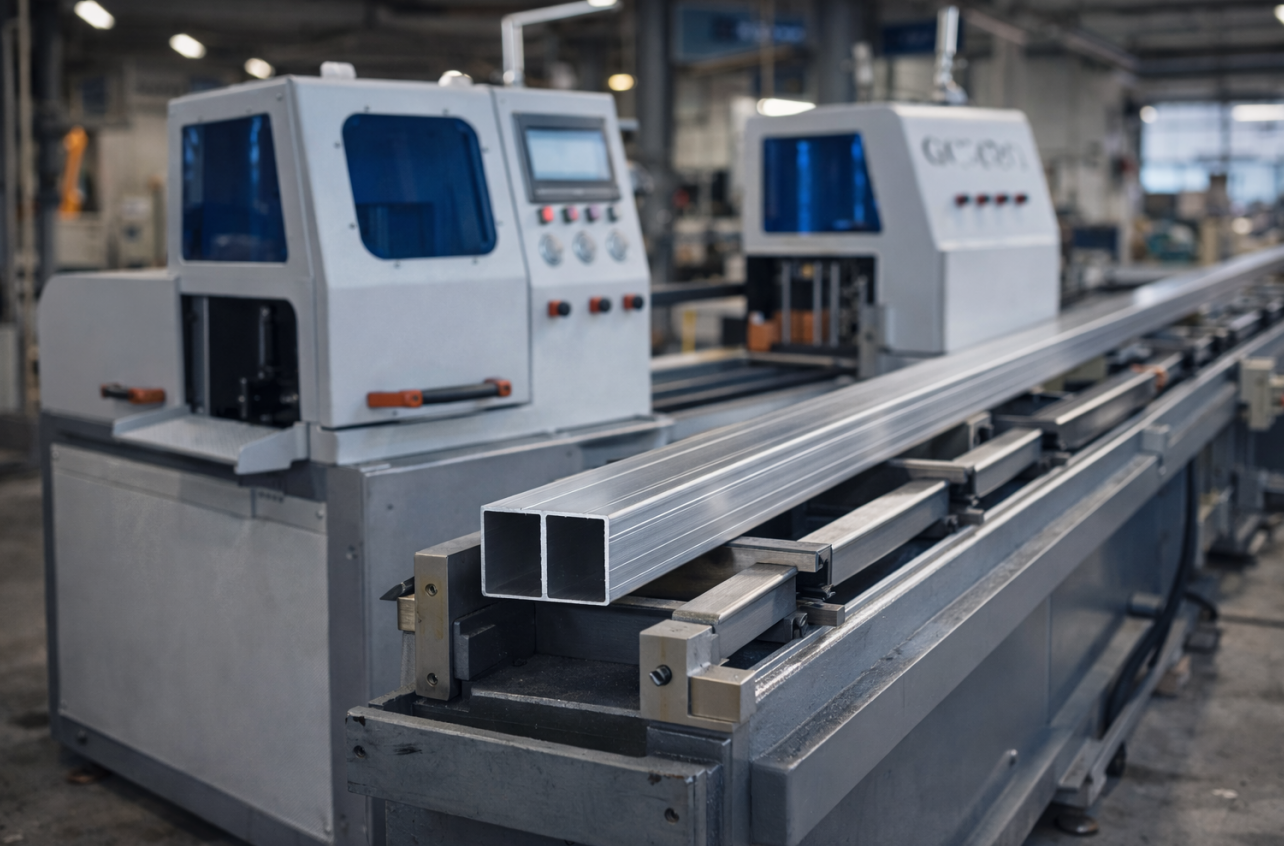
For a cutting saw for aluminum extrusion, you should expect the manufacturer to be specific about support philosophy. How is the profile supported during cutting so it does not sag, but also is not forced into an artificial straightness that disappears later? How does the machine handle different profile geometries without creating new seating variability? These questions matter because stability at cutting is the cheapest place to prevent downstream drift.
A practical buyer signal is whether the supplier asks you about profile length range, wall thickness, and section asymmetry early in the conversation. Those details determine how the part behaves and how support should be designed.
A Reliable Manufacturer Designs for Repeatability, Not Just First-Piece Accuracy
First-piece accuracy is easy to show. Batch repeatability is hard to maintain. That difference is exactly where a real aluminum profile cutting saw manufacturer separates from a catalog supplier.
Your goal is to avoid a process that relies on constant correction. A saw that produces consistent output reduces the need for downstream “interpretation” and keeps cutting accuracy aluminum profiles meaningful across shifts. If the saw output drifts, the shop compensates with fixture adjustments, clamp force, and CNC offsets. Those compensations do not remove the problem. They rearrange it. Over time, that becomes tolerance stack-up and unstable production.
A reliable manufacturer will define repeatability in operational terms, not slogans: stable end-face results across a run, predictable seating behavior, and reduced downstream adjustment frequency. They should also be able to describe how they validate repeatability during ramp-up, using your real profiles and your real acceptance criteria.
What to Expect From an Aluminum Profile Cutting Saw Manufacturer in Real Production
| What the Buyer Should Expect | What Happens in Real Production | Why It Matters |
|---|---|---|
| Consistent end-face squareness | Fixtures locate parts the same way every cycle | Prevents datum shift and tolerance stack-up |
| Stable support for long profiles | Profiles do not sag or twist during cutting | Reduces downstream alignment errors |
| Cutting output designed for batch repeatability | Less offset adjustment during downstream machining | Improves line-level stability |
| Awareness of process interfaces | Fewer re-clamps and manual corrections | Protects accuracy across stations |
| Commissioning support based on real parts | Faster ramp-up with fewer surprises | Shortens time to stable production |
Integration Capability Is What Separates a Supplier From a Manufacturer
In industrial environments, you rarely buy a saw as a standalone island. You are building a flow: cutting, handling, locating, and downstream machining. That is why production line integration is one of the most valuable expectations you should set. A true manufacturer understands how the saw output becomes the input for the next station.
Good production line integration is not only automation. It is consistency. Orientation rules, stop contact logic, burr control, and part handling all affect whether the next station sees the same datum every time. If you have already experienced “cutting looks fine, CNC drifts anyway,” you have seen what happens when integration is treated as an afterthought.
This is also where supplier language reveals capability. A team that only speaks in saw parameters often cannot explain how to protect datum across interfaces. A manufacturer that has handled line projects will ask about your downstream locating method and how you verify alignment across batches. If they can connect the cutting station to your process chain, they are speaking your language.
Commissioning and Support Are Part of the Product, Not Optional Extras
Most cutting saw issues do not appear in a one-hour test. They appear after a week of production, when blades age, batches change, and operators rotate. That is why commissioning matters. Industrial buyers should expect a manufacturer to support validation in a way that matches production reality.
This does not mean a generic checklist. It means helping you confirm the outputs that protect stability: end-face seating behavior, consistency across a run, and the specific checks that predict drift before it becomes scrap. A manufacturer that treats support as an optional add-on is often leaving you to solve integration problems alone, which increases your time to stable output.
What Buyers Should Ask Before Choosing a Manufacturer
Before you commit, ask questions that expose whether you are buying a machine or buying predictable production.
-
How do you verify and maintain end-face squareness across a full run, not just a sample?
-
How is profile support handled for long extrusions to prevent sag without forcing straightness?
-
What are your recommendations to reduce downstream offset adjustments caused by seating variation?
-
What does your commissioning process include for validating stable locating behavior?
-
Can you describe how this aluminum profile cutting saw fits into a linked workflow and what inputs you need from our downstream station?
These questions are designed to reveal whether the supplier understands your risk: stability, not the first cut.
Conclusion
Industrial buyers should expect more than a working blade and a clean cut. A capable aluminum profile cutting saw manufacturer should be able to protect end-face output, support long profiles consistently, design for repeatability across shifts, and communicate how the cutting station fits into a linked process. Those expectations are especially important in window and curtain wall fabrication, where long profiles and tight interfaces make small variations expensive.
If you set your evaluation around stability and process responsibility, you will select a manufacturer that helps you produce predictable parts, not one that hands you a machine and lets your operators fight the variation later.
A Practical Manufacturing Partner for Aluminum Profile Cutting Stability
For industrial buyers, choosing an aluminum profile cutting saw manufacturer is not only about equipment availability. It is about whether the manufacturer understands how cutting performance affects downstream processes and long-term production stability.
MALIDE focuses on aluminum profile cutting solutions used in window and curtain wall fabrication and other lineal extrusion applications, where repeatability and end-face quality directly influence locating accuracy and batch consistency. Rather than treating cutting as a standalone operation, MALIDE designs cutting saws with attention to profile support, end-face geometry control, and compatibility with downstream machining and handling workflows.
FAQ
Q1: Why does cutting saw performance matter so much for downstream CNC accuracy?
A: In many aluminum profile workflows, the cut end becomes a reference surface for locating and fixturing. If end-face geometry or seating consistency varies, downstream CNC fixtures read the part differently each cycle, leading to offset adjustments and tolerance stack-up.
Q2: Is cutting speed less important than cutting stability for industrial production?
A: Speed matters only after stability is proven. A faster cut that introduces variation increases downstream correction work and scrap risk. Stable support, consistent end-face quality, and repeatable output usually deliver higher effective throughput over time.
Q3: How can a cutting saw manufacturer help reduce tolerance stack-up in production lines?
A: A capable manufacturer designs cutting output to support consistent datum transfer. This includes controlling end-face squareness, minimizing burr-related seating changes, and aligning cutting behavior with downstream fixturing and handling methods.
Q4: What should buyers look for during cutting saw commissioning?
A: Buyers should verify repeatability across a run, not just first-piece accuracy. This includes checking whether parts seat consistently on stops, whether end-face quality remains stable over time, and whether the cutting output reduces the need for downstream adjustments.
Q5: How does cutting saw selection differ for long aluminum profiles used in curtain wall systems?
A: Long profiles amplify small variations. Proper support during cutting is critical to prevent sag or relaxation that changes the part state. Manufacturers experienced in window and curtain wall fabrication usually place more emphasis on support design and stability than on headline cutting speed.


