



Top 5 Mistakes Aluminum Processors Make When Using Manual Profile Saw & Drilling — And How CNC Fixes Them
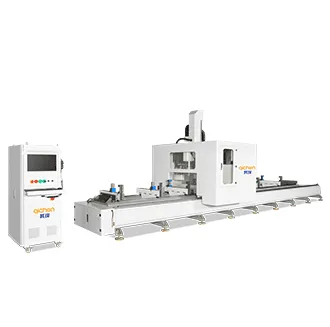
If you work with aluminum profiles every day, you know the real work starts long before the frame reaches assembly. Cutting, drilling and slotting might look basic from the office, but out on the shop floor small errors in these steps turn into big problems later. Frames that do not close, hardware that will not fit, sashes that stick on the track – most of this comes from the way the profile was processed.
When you rely only on manual saws and hand drills, you place all the pressure on the operator. A modern aluminum profile CNC machine shifts that pressure onto a stable system, so you get repeatable results instead of hoping each cut is “close enough”.
Mistake 1: Inconsistent Cutting Lengths
Length errors are one of the most common issues in profile workshops. It can be as small as one or two millimeters, but that is enough to twist a sash frame or leave an unwanted gap in a corner.
How It Happens
Manual saws depend on marks, tapes and operator habits. Blade wear, small changes in clamping and even fatigue at the end of a shift all push the cut away from the target length. The longer the profile, the more obvious the difference.
How CNC Fixes It
On a CNC line, length comes from a programmed dimension, not a pencil mark. Servo driven axes position the profile and the saw or tool moves to the same point every cycle. You clamp once, run the program and get the same result across the batch, which makes your corner joints and frame sizes far more consistent.
Mistake 2: Misaligned Hardware Holes
Sliding windows and doors depend on precise hardware positions. If lock and roller holes are off, the product never feels right, no matter how well you try to adjust it.
How It Happens
With hand drilling, you rely on templates, manual marking and eye judgment. A small shift in a template, or a bit wandering on a curved surface, can move the hole just enough to cause problems. Over a long track or tall sash, these small offsets add up.
How CNC Fixes It
CNC drilling follows coordinates, not guesswork. When you program hole positions into a cnc machine aluminum cutting and drilling cycle, each hole sits exactly where it should, profile after profile. Deep holes, angled holes and combined hole patterns are all handled in one setup, so the hardware fits straight at assembly.
Mistake 3: Rough Slotting and Burr Problems
Slots for drainage, locks and accessories need clean edges. Rough slotting leads to leaks, poor gasket fit and a cheap look when the window or door is open.
How It Happens
Hand routers and basic slotting tools tend to vibrate. As tools wear, the cut becomes rougher and the burrs get worse. Operators then spend extra time filing and deburring, which slows the line and still may not give a consistent result.
How CNC Fixes It
A high speed spindle with stable feed creates smooth slot edges and more accurate depths. On a cnc machining center for aluminum fabrication, you can slot, contour and face mill in one pass, with the right tool for each operation. That cuts down on burrs and nearly removes the need for manual cleanup around the slot.
Mistake 4: Multiple Setups Causing Accumulated Errors
When you move a profile through three or four different stations, each setup introduces a chance for alignment drift.
How It Happens
One machine cuts length, another drills, a third handles slots. Each time, the profile is re-clamped and re-referenced. Even if each step is only slightly off, by the time you reach assembly the error can be visible in the finished frame.
How CNC Fixes It
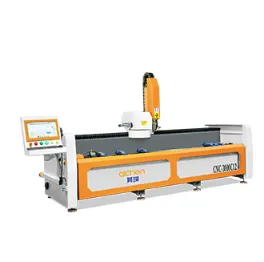
A profile machining center lets you clamp once and run a complete cycle. Cutting, drilling, milling and slotting all follow the same zero point. That single reference reduces accumulated error and keeps geometry tight, especially on longer pieces for sliding windows and curtain wall frames.
Mistake 5: Production Bottlenecks Under Large Orders
Manual processing can seem fine at low volume, but when orders peak the limits show up fast.
How It Happens
Multiple passes, long setup times and rework quickly eat into capacity. Profiles wait in stacks between stations, and delivery dates start to slip. Operators feel constant time pressure, which often causes more mistakes.
How CNC Fixes It
A high-speed cnc machine for aluminum profiles runs at predictable cycle times. Once programs are tuned, you know how long a batch will take and can plan around that. One operator can watch several jobs instead of fighting with separate saws and drills, which helps your line keep moving even on busy days.
Why Changing From Manual to CNC Matters for Aluminum Processors
All five mistakes share one root cause: too much depends on manual marking and hand tools. As soon as you move key steps onto a CNC platform, you replace habit with data and guesswork with coordinates. That shift helps you cut rework, improve finished product feel and support tighter project schedules. In a market where clients expect quiet, smooth and durable aluminum windows and doors, that difference is hard to ignore.
Foshan Malide Intelligent Equipment Co., Ltd. (MALIDE)
Foshan Malide Intelligent Equipment Co., Ltd., known as MALIDE, focuses on intelligent machinery for aluminum alloy processing. Company data shows it is a national high-tech enterprise that brings together research, production, sales and service under one roof, with a plant area over 6,000 square meters and a team including senior engineers and skilled technicians.
MALIDE’s product range covers profile machining centers, gantry machining centers, horizontal centers and cutting saws for doors, windows, curtain walls, industrial aluminum and other fields.
Machines are supplied to many regions, including Europe, the Middle East, South America and Southeast Asia, with thousands of installations already in operation.
For processors who want a reliable cnc machining center for aluminum fabrication, this mix of experience, product depth and global service support gives you a partner that fits both daily workshop work and long term project growth.
FAQ
Q1: Is CNC really necessary if my manual operators are very skilled
A: Skilled operators are valuable, but even the best person will sometimes have off days. CNC keeps lengths, hole positions and slot depths stable across the whole batch, so your quality does not depend on one person’s mood or energy.
Q2: Will a CNC machine slow my production at the beginning
A: There is a learning phase, but once basic programs and fixtures are in place, most workshops see shorter cycle times and fewer bottlenecks compared with manual cutting and drilling.
Q3: What type of profiles benefit most from CNC machining
A: Long window and door frames, sliding tracks and curtain wall members gain the most, because small length and hole errors are much more visible on these parts.
Q4: Is a CNC machine aluminum cutting process hard to maintain
A: Daily care is simple when you follow the maker’s routine checks. Keeping tools sharp, cleaning chips and checking clamping surfaces are usually enough to keep the process stable.
Q5: How do I know it is time to move to an aluminum profile CNC machine
A: Signs include frequent rework, inconsistent frame sizes, hardware that often needs adjustment and difficulty meeting delivery dates during busy periods. When these problems become normal, CNC is usually the next logical step.


