



From Window Frame to CNC Machining: Why Aluminum Sliding Window Makers Need a High-Speed Aluminum Profile CNC Machine
Aluminum sliding windows look simple on the wall, but you know very well how much work hides behind a smooth, quiet sash. Most complaints from end users do not come from the glass or the lock. They come from frames that don’t line up, sashes that drag on the track, and corners that do not seal. All of that starts earlier, at the moment you process the aluminum profiles.
If you want stable quality and still keep delivery times short, you cannot treat profile machining as a basic sawing job. High-speed aluminum profile CNC machining turns that messy middle step into a controlled, repeatable process instead of a daily struggle with tape measures and rework.
The Modern Aluminum Sliding Window Manufacturing Workflow
Today, a typical sliding window project moves through a clear chain: design, cutting the profiles, drilling and milling all the functional features, surface treatment if needed, and then assembly and glazing. The glossy brochures usually show the last step, but most of the real risk sits in the profile machining part.
Every sliding window frame needs accurate length cuts, drainage slots, lock holes, handle holes, roller pockets, and sometimes special shapes for curtain wall integration. When you try to do this with basic saws and stand-alone drills, each operator carries that accuracy on their shoulders. One small slip shows up later as a panel that does not slide well or a sash that refuses to lock.
A faster and more stable way is to shift that load onto a CNC platform that is made for aluminum profiles, especially for medium and long pieces used in windows and curtain walls.
Common Processing Challenges in Sliding Window Profile Production
If you walk the workshop floor during a busy day, the weak spots appear fast. You see operators chasing burrs with files, re-drilling holes to match hardware, or trimming small pieces off the end of a profile because the length is off by a millimeter or two.
Manual cutting and drilling often lead to:
-
profile length differences that make sashes twist in the frame
-
misaligned hardware holes, so locks or rollers do not sit flat
-
uneven slots that affect drainage and air tightness
-
many setups for one profile, which stack small errors into large ones
When you scale up production for a project, these small problems turn into full days of rework. That is the moment you start to feel the need for a more controlled, automated way to handle aluminum profiles.
What a High-Speed Aluminum Profile CNC Machine Actually Does
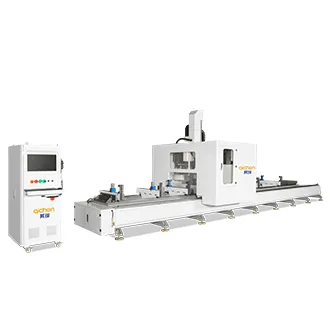
A dedicated cnc machine aluminum cutting and machining center for profiles does more than cut to length. On a machine like this, you clamp the profile once, then let the program handle cuts, holes, slots, and special shapes in one continuous cycle. The three-axis profile frame vertical machining center layout, with X strokes around 7000 mm and high spindle speed up to 24,000 r/min, is typical for long aluminum profiles.
With the right tooling, you can mill planes, contours, surfaces, drill deep or precise holes, and open lock slots and irregular openings for fittings. The same platform can also handle curtain wall profiles and other structural parts, so you are not locked into one window series.
Automatic tool change, often with a straight-line or disc magazine, means you do not have to stop for each feature. The program calls the next tool, the spindle swaps in a few seconds, and the cycle keeps running.
Why Sliding Window Manufacturers Benefit the Most
Sliding windows may look lighter than hinged doors, but they are very demanding on machining accuracy. The sash must slide freely along the track while staying square and tight. This is where a high-speed aluminum sliding window cnc machine brings real value.
Faster Production for Large Aluminum Profiles
Long side frames and tracks take time on simple saws and manual drills. A high-speed CNC machine works at consistent feed rates and spindle speeds, so you clear batches of profiles in far less time. Instead of moving one bar through three or four workstations, you let one cell do the work in one go. That also makes planning easier on busy days.
Accuracy That Reduces Assembly Problems
When all cuts and holes come from the same coordinate system, the fit at assembly changes a lot. Corners close better, rollers sit straight, and locks line up with their keepers without extra filing. Over a full project, this cuts down the number of units that need adjustments on site, which is something clients notice even if they never see your workshop.
Lower Labor Load With Automated Cycles
With manual setups, every extra operation means more labor and more chances for error. A CNC cell lets one trained operator watch several jobs. Once programs and fixtures are stable, the operator spends more time supervising and less time wrestling with tape measures and hand tools. It is not about removing people, but about giving them work that matches their skills instead of repeating the same drill pattern all day.
Compatibility With Different Window Systems
Most shops do not run only one sliding window system. You may handle single-track, double-track, three-track frames and even special balcony systems. CNC programs let you store each profile series and call it back when needed. That way you avoid “reinventing” dimensions every time you change from one project to another.
How CNC Machining Enhances Product Quality and Brand Reputation
From the end user’s point of view, a good sliding window is one that moves smoothly, locks without effort, and keeps out wind and rain. All three depend on the geometry you cut into the profiles. Consistent slot depth means better drainage. Proper hardware locations give smoother motion. Clean cuts and milled surfaces look better when the window is open.
Better machining also shows in after-sales numbers. Fewer service calls for “hard to slide” sashes or water leakage means less cost and more trust over time. For builders and project clients, that reliability is often what pushes them to stick with one supplier on the next building.
What to Look for When Choosing a High-Speed CNC Machine
When you select a CNC platform for sliding window work, it helps to look at real, daily needs instead of spec sheets alone. Travel length should cover your longest profiles with some margin. Spindle speed and power must fit aluminum machining, not just light drilling. Tool magazine size matters if you run complex profiles with many different hole and slot types.
You should also check how the control handles batch programs, profile libraries, and repeat jobs. A machine that can mill, drill, and slot medium and large profiles for doors, windows, and curtain walls in one clamping, as typical for modern profile machining centers, gives you more room to grow into other product lines later.
Foshan Malide Intelligent Equipment Co., Ltd. (MALIDE)
Foshan Malide Intelligent Equipment Co., Ltd., often called MALIDE, is a national high-tech enterprise focused on intelligent aluminum alloy processing equipment. Company information shows that MALIDE integrates R&D, production, sales, and service, with more than 6,000 m² of plant area and a team that includes over a dozen senior engineers.
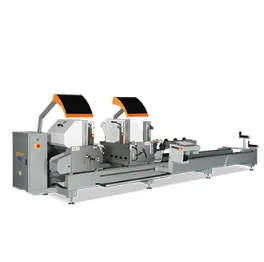
The product range covers profile machining centers, gantry machining centers, horizontal profile machining centers, and aluminum profile cutting saws for doors, windows, curtain walls, industrial aluminum, rail transit, and other fields.
Export records indicate shipments to more than 30 countries across Europe, the Middle East, South America, and Southeast Asia, along with thousands of installed machines.
For window and curtain wall makers, that mix of equipment breadth, project experience, and global after-sales support gives you a partner that speaks the same language as your workshop, from profile drawings to real chips on the floor.
FAQ
Q1: Why do aluminum sliding windows need CNC machining at all?
A: Sliding windows depend on very accurate profiles. If cuts, holes, and slots are off, the sashes drag, the locks do not line up, and sealing performance drops. CNC machining keeps those key dimensions consistent across the whole batch.
Q2: Is a CNC machine only useful for large factories?
A: Not really. Even a medium-size workshop can benefit, especially if you handle repeat window systems or project orders. The value shows up in fewer mistakes, less rework, and a more stable daily rhythm in production.
Q3: Can one CNC machine handle both window frames and curtain wall profiles?
A: Many aluminum profile centers are built for that mix. As long as the travel, clamping and tooling suit your longest and heaviest profiles, you can switch between window frames and curtain wall members by changing programs and fixtures.
Q4: How does a CNC machine aluminum cutting process change daily work for operators?
A: Operators move from manual marking and drilling to setting up jobs, loading profiles, and monitoring cycles. The work becomes more about checking quality and less about repeating the same manual steps every hour.
Q5: What is the first sign that a workshop should move to an aluminum sliding window cnc machine?
A: Common signs are growing order volume, frequent rework on profiles, and too many hours spent fixing hole positions or length errors. When those patterns show up often, a dedicated CNC line usually pays back faster than you expect.


