



Dual Workstation CNC Centers: Eliminate Machine Downtime
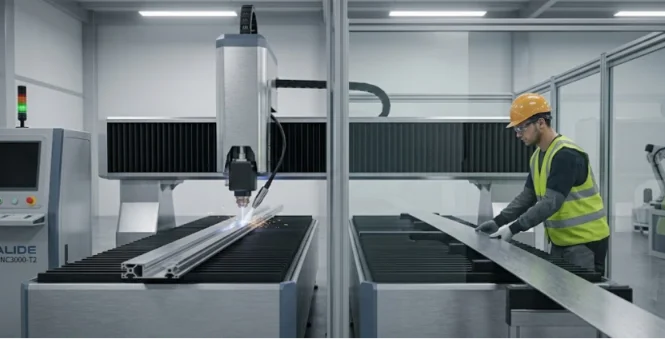
Walk through any busy factory making metal doors or window frames today. You will often see a very common problem. A skilled worker just stands by the machine, doing absolutely nothing. He is waiting. The machine is running a long piece of metal, and until the motor stops, he cannot move to the next step. This waiting period is known as machine downtime. In the world of profile machining, stopping the main cutting head to load new material kills your daily output. You lose money every single minute that cutter is not touching metal. To completely fix this, you need a different approach. You need a setup where the cutting never stops.
What Is the Hidden Cost of Machine Idle Time in Profile Machining?
Every time a machine stops moving, you lose cash. It really is that simple. Factory owners often buy fast machines but forget about the loading process entirely. They focus purely on the cutting speed. But if your machine spends half the day waiting for a human to swap parts, that fast motor does not help much at all. When making custom items, pieces are rarely the same. You might cut a thick frame piece first. Then the next piece is a very thin strip. The worker has to change the clamps and measure things out. This manual adjustment takes even more time. The boss pays for electricity, rent, and wages while the main tool rests. This is a massive hidden cost that eats away at end of year profits.
The Trap of Single Workstation Setups
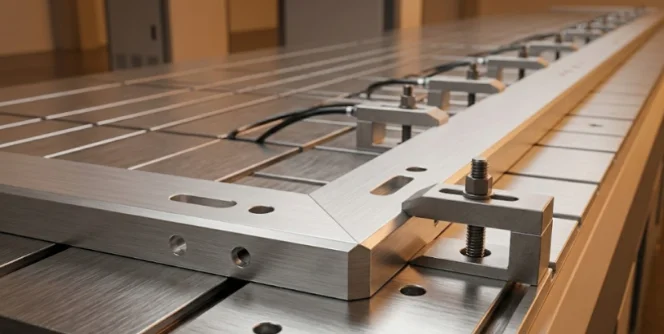
Think about a normal work cycle. First, the cutting finishes. The operator opens the heavy safety doors. He unclamps the metal. He blows away all the sharp little metal chips that always seem to stick in the worst corners of the clamps. Then he pulls out the finished piece. Next, he grabs a raw piece of aluminum. He locks it in place. Finally, he hits the start button again. All of this takes several minutes. During those minutes, you have massive spindle idle time. The tool does zero work. If you do this fifty times a day, you waste hours of paid labor and expensive machine time.
How Does a Dual Workstation Setup Actually Work?
Fixing this delay problem requires a big change in how the work table is built. Instead of one big loading zone, the machine divides the physical space. You get two completely separate areas for your daily work. This creates a very safe and smooth workflow. Some factories try to run two old single machines side by side. They think this solves the problem. But now you have two footprints taking up valuable floor space, and you need two operators. A split table system gives you the output of two machines inside the footprint of one.
The Power of Cyclic Loading and Unloading
Think of it like having two different tables under one roof. The machine works on the left side. It cuts the metal. At the exact same time, your operator stands safely on the right side. He takes out the finished part. He puts in a brand new piece and locks it down. When the machine finishes the left side, the cutting head simply moves over to the right side and starts cutting immediately. There is no waiting around. This smart method is called cyclic loading and unloading. You prep side B while side A gets cut. To completely eliminate spindle idle time, upgrading to a dual workstation CNC center allows operators to load new profiles while the machine continuously mills on the opposite side. It is a massive game changer for busy shops.
What Makes the MALIDE QCL-CNC3000-T2 Different?
Finding a brand that actually solves these floor problems is tough. Many companies just build basic frames and slap a computer on them. As an expert looking at industrial tools daily, examining factory gear reveals who actually builds solid equipment. Foshan Malide Intelligent Equipment Co., Ltd. focuses heavily on smart machines for the metal and furniture markets. They do not just build generic tools. They design highly specific equipment for tough jobs like making custom home furnishings and minimalist metal frames. Their machines run all day without breaking a sweat, handling the messy reality of a real factory. They know that a factory needs tools that solve real human delays, not just machines with high speed ratings on a brochure.
Built for Speed and Precision
Handling very long pieces of metal is usually a nightmare for workers. A worker has to slide a huge piece, cut half of it, and then slide it again. This causes huge alignment mistakes. The QCL-CNC3000-T2 has a massive 3000mm X-axis. You can fit giant pieces in there without moving them twice. It handles milling, chamfering, and flat carving perfectly. But the best part is the head configuration. Equipment like the QCL-CNC3000-T2 takes this efficiency a step further by utilizing a dual-spindle CNC machine design, switching instantly between drilling and milling operations without requiring a manual tool change. Cutting circular and slot holes used to take forever because the machine had to drop the drill bit and pick up the milling bit. That tool change time is now zero.
What Are the Financial Advantages of Upgrading Your CNC Equipment?
Money is the main reason you buy new tools. You want a high return on your investment as quickly as possible. A machine that runs non stop pays for itself very fast. Turning a massive motor on and off also takes a huge spike of power. Keeping it running steady on a dual table setup actually smooths out your energy use and avoids heavy wear and tear on internal gears.
Doubling Output Without Adding Labor
Finding good workers is hard today. Paying them is expensive. When you use a machine that never stops cutting, one worker produces twice as much as before. He just keeps loading and unloading smoothly. He does not stand around. Your daily output shoots up. Also, the overall quality gets better. Because the machine stays warm and runs continuously, the cuts stay smooth. You get clean edges and perfect holes. This means you do not have to pay another worker to file down rough edges later.
FAQ
Q1: What exactly causes machine downtime in a metal shop
A: Waiting for operators to safely remove finished parts and clamp in new raw metal causes the most delays.
Q2: How does a dual workstation setup fix this delay problem
A: It splits the work area into two distinct zones. The operator loads one side safely while the cutting head works on the other side.
Q3: Why is a dual spindle design better than a single spindle
A: A dual spindle holds two different tools ready at the same time. It switches between drilling and milling instantly. You waste zero time changing tools.
Q4: What size of materials can fit in these machines
A: Heavy duty machines feature a very long work area. You can easily fit and process a full 3 meter aluminum piece without ever sliding it.
Q5: Are these machines good for making custom home furnishings
A: Yes they are. They easily handle the weird angles, flat carving, and custom holes required for high end furniture and window frames.


