



BT30 vs. BT40 Spindles: The Best CNC Choice for Aluminum Profiles
When shopping for a new CNC machine, you might feel tempted to just buy the biggest, heaviest equipment your budget allows. Many shop owners fall into this trap. But when your main focus involves aluminum alloy processing equipment, buying an oversized machine often drains your capital for no real benefit. You end up paying for a heavy cast iron footprint that just sits there slowly making parts. To see how specialized equipment actually makes a difference, look for a track record rooted in actual shop floor reality rather than just flashy brochures. Take MALIDE for example. Since hitting the market back in 2017 , this innovative national high-tech enterprise has quietly built a massive footprint in the industry. Walking through a production site of 6000 square meters really puts things into perspective. It takes serious infrastructure to support that kind of manufacturing volume without overcharging for the badge on the machine. They rely on a tight crew of more than 50 professional employees to keep the floor moving.
You often see domestic machines struggle to hold tight tolerances after a few years of hard running. However, their independently developed three-axis and four axis machining centers deliver high precision and high stability. The performance is comparable to imported equipment , giving you a super high cost performance ratio that actually makes financial sense. It explains why they have successfully cooperated with over 5000 customers over the years. Whether your shop sits in Europe, America, Russia, Turkey, Israel, Malaysia, Thailand, or Vietnam, tapping into machinery built by a manufacturer with that level of global reach simply gives you a mechanical edge. Seeing an operation like this proves that you need the right tool for the job, not just the biggest piece of metal on the market.
What Are the Core Differences Between BT30 and BT40 Spindles?
Before spending capital on heavy shop floor assets, you need to look at the physical mechanics separating these two setups. It comes down to size, mass, and how those specific factors directly affect machine movement on a daily basis.
Physical Size and Mass
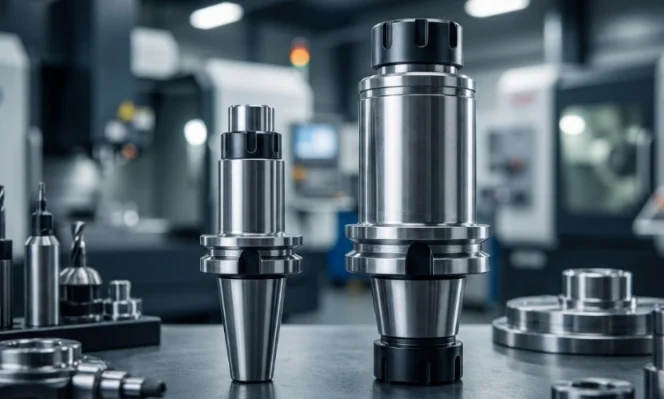
Let’s look at the actual physical dimensions. The spindle taper of a BT30 measures 100mm in outer diameter. On the flip side, a BT40 spindle taper is noticeably bulkier with an outer diameter of φ120mm. This 20mm difference might look small on a printed spec sheet, but on the shop floor, it changes everything. A bigger taper requires a larger, heavier tool holder. When you hold a BT40 tool holder in your hand, you immediately feel the heavy heft. Now imagine the machine’s mechanical arm grabbing that heavy chunk of metal and swinging it around hundreds of times a shift. When you add up the weight of the holder, the pull stud, and the cutting tool itself, the BT40 setup carries significantly more mass.
Inertia and Acceleration
Heavier objects simply take more energy to start moving and more energy to stop. This is just basic shop floor physics. A lighter BT30 spindle taper accelerates incredibly fast due to its lower mass. This rapid acceleration is crucial for reaching top cutting speeds quickly. When making hundreds of small drilled holes or short milling passes, the spindle constantly starts and stops. The low inertia of the smaller taper lets the machine dart around the workpiece with intense, snappy agility.
Why Is the BT30 the Undisputed Champion for Aluminum Profiles?
Aluminum acts as a very soft and forgiving metal compared to hardened steel or titanium alloys. It does not need brute force to yield a clean cut. Instead, this material thrives on speed, high feed rates, and quick directional changes during the milling process.
Perfect Match for High Speed Light Cutting
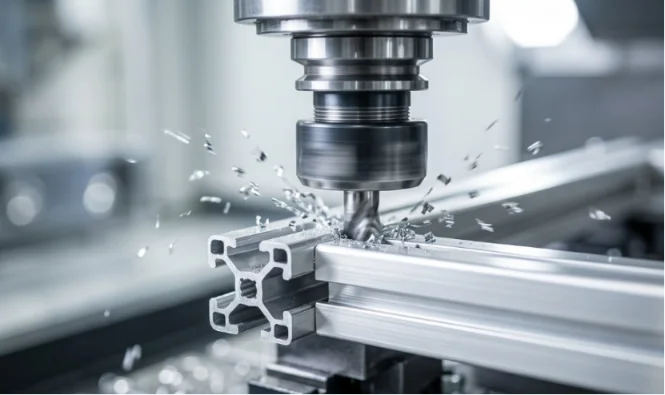
If you look at the raw specifications, both spindle types can reach a speed of 12000r/min. However, the lighter spindle hits that 12000r/min mark much faster. This specific agility makes the BT30 series profile machining center highly suitable for light steel, aluminum frame, copper frame, and nonmetallic frame processing. Because it handles light materials so well, these machines are widely used in electronic appliances, custom home furnishings, and aluminum frames. You get a rapid, clean cut that leaves a beautiful surface finish on your finished parts without wasting time.
Reducing Cycle Time in Batch Production
In high volume production runs, seconds literally translate to dollars. If you stand next to a machine cutting small parts, you will notice the spindle spends a lot of time just moving into position. It zips over, drops down, drills a hole, and pulls back up. Every time the machine changes a tool or ramps up to cutting speed, you spend time not making chips. A nimble machine shaves a fraction of a second off every single motion. Multiply that saved time by thousands of parts a month, and the difference in overall cycle time becomes massively profitable.
When Is a BT40 Spindle Actually Necessary?
There are absolutely times when a heavier, stiffer machine is the right call for a manufacturing business. You always have to match the tool to the specific job requirements and the hardness of the raw material hitting your loading dock.
Handling Heavy Duty Materials
Sometimes you actually need that extra bulk to get the job done right. A BT40 machine is highly suitable for processing various steel, aluminum, copper metals, and non metals. This heavier, rigid build makes it widely used for material processing in industries such as rail transit, aerospace, military machinery, linear module guide rails, and communication. When a heavy cutting tool buries itself deep into a block of tough aerospace-grade steel, the massive φ120mm spindle taper absorbs the violent vibrations that would otherwise ruin a lighter machine.
The Cost of Unnecessary Power
But ask yourself a simple question about your daily operations. Are you building military tank tracks or lightweight sliding door frames? If your core business involves light structural frames, dragging around a massive BT40 head just slows down your entire operation. It is like driving a dump truck to deliver a small pizza. It works, but it makes zero financial sense.
What Matters Beyond the Spindle: Tool Magazines and Machine Weight?
The spindle taper tells only part of the story when evaluating new equipment. You also have to factor in the supporting hardware like automatic tool changers and the sheer physical footprint of the machine itself.
Tool Replacement Time and Capacity
Let’s talk about the tool magazine setup. A typical BT30 series machine comes with a tool capacity of 16pcs. In contrast, a heavier BT40 machine often features a capacity of 24pcs. While 24 tools sound better during a sales pitch, you rarely need that many tools for standard frame processing. The 16 tool capacity of the BT30 handles complex jobs easily. Plus, the lighter tool holders mean the mechanical arm swaps tools much faster, directly reducing your overall tool replacement time.
Overall Machine Weight and Power Consumption
You also have to look at the total mass sitting on your concrete floor. Interestingly, both machine types run on a main power of 7.5kw. But the weight difference is staggering. A BT30 machine has a total weight between 5000 and 10000kg. A BT40 tips the scales with a heavy weight of roughly 10000 to 14000kg. Pushing an extra four tons of cast iron back and forth all day wastes energy. The BT40 also demands more floor space, carrying an overall dimension of 6900x2500x2600mm compared to the leaner 5000x2500x2600mm dimension of the BT30.
How Does the ROI Equation Help You Stop Overspending on Equipment?
At the end of the day, your machine shop operates as a business designed to generate profit. Every equipment purchase needs to make financial sense and pay for itself as quickly as possible without draining operating cash flow.
The Right Sizing Strategy
Buying a heavier machine for light work hurts your bottom line from day one. It feels safe to buy the heaviest machine available just in case a crazy heavy job comes through the door. But that safety net costs you upfront capital, higher shipping fees, and increased daily electricity bills. Right-sizing your equipment means buying exactly what your daily application demands.
Maximizing Daily Output
By deploying a , you gain the distinct agility needed to output more parts per hour. Faster rapids, quicker tool changes, and rapid spindle acceleration mean the cutting tool spends more time actually making money. Higher daily output equals more invoiced parts at the end of the month. It is a simple, proven equation that transforms shop floor efficiency into real financial growth.
FAQ
Q1: What materials are suitable for a BT30 machining center?
A: This type of machine is highly suitable for light steel, aluminum frame, copper frame, and nonmetallic frame processing.
Q2: What is the maximum spindle speed of the BT30 series?
A: The spindle speed of the BT30 series reaches 12000r/min.
Q3: How many cutting tools can the BT30 tool magazine hold?
A: The BT30 series features a tool capacity of 16pcs.
Q4: What industries commonly use the larger BT40 series machines?
A: The heavier BT40 series is widely used for material processing in industries such as rail transit, aerospace, military machinery, linear module guide rails, and communication.
Q5: Are these aluminum profile machining centers exported internationally?
A: Yes, these products have been exported to Europe, America, Russia, Turkey, Israel, Malaysia, Thailand, Vietnam, and more than a dozen other countries and regions.


